Enterprise Hardware
Precision Edge-Computing & Android Mocap Ecosystems
Explore production-grade inertial suits, high-DOF dexterous gloves, and multi-modal sensory teleoperation systems built for native cross-platform deployment.
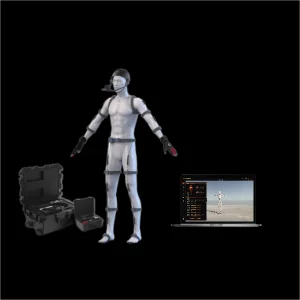
Design DreamsCap X1 Full-Body, Hand & Face Motion Capture for Humanoid Robot Data Collection & Teleoperation Planning, Solution
Explore Architecture →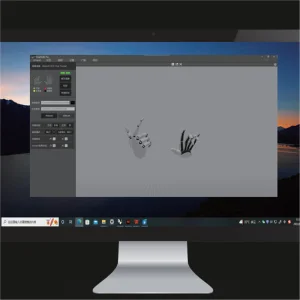
Best Virdyn mHand Studio Motion Capture Gloves Software System for mHand Pro Planning, Solution
Explore Architecture →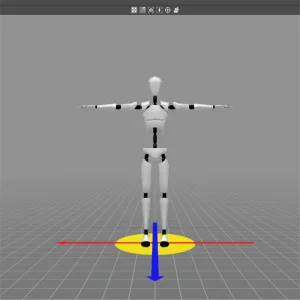
Design Virdyn VDMocap Studio Plus Motion Capture Software System for VDSuit Full Planning, Solution
Explore Architecture →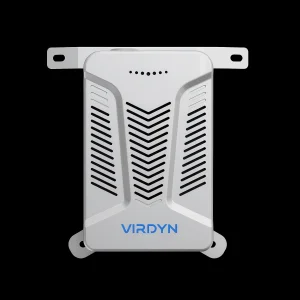
Best Humanoid Robot Intelligent Voice Interaction Development Kit Planning, Solution
Explore Architecture →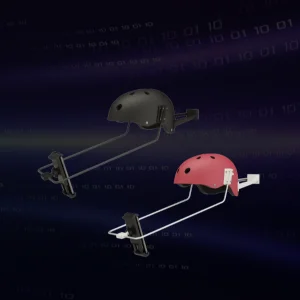
Best Virdyn VDFace Capture System for Real Time Facial Capture with Face Capture Helmet Planning, Solution
Explore Architecture →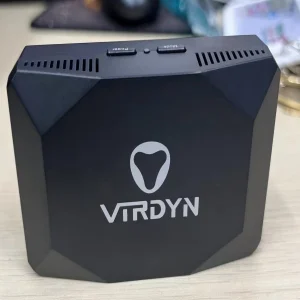
Design Full Body Motion Capture Accessories for Suit Hub Planning, Solution
Explore Architecture →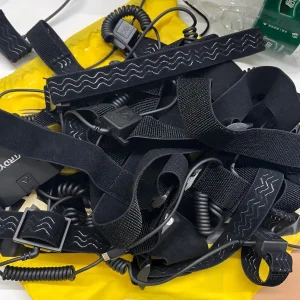
Best Full Body Motion Capture Accessories for Suit Elastic Tapes Planning, Solution
Explore Architecture →
Technical White Paper
The Paradigm Shift: Motion Capture Android Architecture
Architecting wearable spatial awareness and low-latency joint retargeting on distributed, edge-native Android computing environments.
Historically, high-fidelity kinematic capture was shackled to heavy-duty x86-64 workstations, bulky optical multi-camera arrays, and strict studio infrastructure. The advent of Motion Capture Android Planning & Solutions marks an epochal paradigm shift in biomechanical tracking and spatial digitization. Contemporary spatial pipelines demand untethered operational freedom, field mobility, and real-time streaming directly into embedded micro-architectures, standalone Extended Reality (XR) headsets, and sovereign robotic teleoperation platforms.
Designing for the Android Open Source Project (AOSP) ecosystem requires an exhaustive re-engineering of the kinematic computational stack. Unlike desktop environments with boundless thermal envelopes and deterministic CPU scheduling, mobile and embedded Linux environments necessitate relentless optimization across USB Host protocols, Bluetooth Low Energy (BLE 5.3/5.4) PHY layers, native Android NDK (C/C++) numerical pipelines, and thread priority scheduling under rigorous Android thermal management throttling.
From an enterprise systems engineering perspective, an Android-native motion capture stack transforms consumer and industrial mobile systems into decentralized edge-computing nodes. By conducting mathematical sensor fusion—incorporating Extended Kalman Filtering (EKF), 9-axis AHRS (Attitude and Heading Reference System) algorithms, and quaternion joint-angle conversion—directly inside native Android hardware abstraction layers, operational latency collapses to under 20 milliseconds, liberating capture teams from heavy server hardware.
<20ms
Deterministic End-to-End Edge-to-Engine Latency
27 DOF
Full Articulation Biomechanical Skeleton Solving
1000Hz
Raw Internal IMU Sampling Rate for Zero Drift
99.8%
Frame Transmission Integrity Over Dynamic Wi-Fi 6
Global Sourcing Strategy
Enterprise Sourcing: Android-Centric Motion Capture
Dissecting the multi-faceted procurement matrices of tier-one technology enterprises, game studios, and robotics laboratories worldwide.
Embodied AI & Humanoid Teleoperation
Global robotics labs are shifting away from rigid desktop-tethered capture. Leading humanoid developers require Android-native wearable motion systems capable of pairing with edge compute units (e.g., RK3588, Qualcomm Snapdragon Spaces, and NVIDIA Jetson via Android kernels) to collect human demonstration datasets for imitation learning and real-time remote dexterity manipulation.
Decentralized Live Broadcast & VTubing
The exploding virtual influencer and VTubing sectors across Japan, South Korea, and the West demand all-in-one broadcast nodes. Studio managers demand turn-key systems where an Android tablet or mobile phone ingests full-body skeletal telemetry, solves blendshapes, renders custom 3D avatars via Unity/Unreal Engine mobile runtimes, and streams directly to RTMP servers.
Academic & Biomechanical Field Deployments
Tier-one university biomechanics and sports medicine research departments prioritize hardware resilience, outdoor electromagnetic calibration reliability, and flexible low-level data access. Procurement audits strictly evaluate whether the Android SDK grants direct, unquantized access to high-frequency acceleration vectors, angular velocities, and global orientation quaternions.
Advanced Manufacturing
China Industry 4.0: Supply Chain Resilience & Precision Engineering
How Guangzhou and Greater Bay Area manufacturing clusters empower global clients with high-yield, precision-calibrated motion capture hardware.
Developing high-precision motion capture hardware—particularly systems integrating miniature 9-axis sensor clusters, high-flexibility textile harnesses, and proprietary low-power wireless transceivers—demands an ultra-mature electronic and mechanical industrial ecosystem. The Greater Bay Area (Guangzhou-Shenzhen-Dongguan) provides an unparalleled competitive advantage through China Industry 4.0 industrial clustering.
Within this tightly woven supply ecosystem, every layer of product development undergoes rapid iterative feedback loops. High-precision Surface Mount Technology (SMT) lines achieve sub-millimeter placement of MEMS sensor dies with automated optical inspection (AOI) and automated X-ray inspection (AXI). Specialized CNC multi-axis milling ensures ultra-lightweight, drop-resistant housings for body sensor nodes, while advanced ergonomic textile weaving incorporates anti-bacterial, breathable, and mechanically stable elastic retention tape arrays designed to prevent skin-motion artifact degradation.
Crucially, Virdyn leverages vertical supply-chain integration. By managing hardware layout, firmware microcode, multi-axis automated turntable calibration systems, and high-frequency RF tuning under a unified quality assurance regime, the platform eliminates dependencies on fragmented third-party sub-assemblies. This integrated resilience guarantees predictable delivery cycles, custom OEM/ODM white-label configurability, and sustained hardware longevity for mission-critical deployments.
Automated Tri-Axial Turntable Calibration
Every sensor cluster undergoes multi-temperature, tri-axial robotic turntable compensation routines to eliminate zero-point bias, cross-axis sensitivity, and non-linear scale factors prior to assembly.
Textile Biomechanics Integration
Ergonomic wearable harnesses use anti-slip silicone tension channeling to ensure IMU nodes remain rigidly coupled to biological skeletal landmarks, neutralizing soft-tissue artifact distortion.
Uncompromising Quality Traceability
Full-lifecycle barcode tracking logs component-level batch parameters, RF antenna impedance sweeps, and drop-cycle stress verification for every shipped enterprise unit.
Implementation Blueprints
Localized Engineering Use Cases & Edge Integration
Operational blueprints detailing how field engineers implement Android motion capture solutions across diverse commercial topographies.
Standalone XR Headset Tracking Nodes
Operating fully untethered on Android-based standalone headsets (e.g., Meta Quest Pro, HTC VIVE Focus 3, Pico 4 Enterprise). The Android-native VDMocap SDK connects via native USB OTG or direct local BLE GATT services.
- Zero host PC reliance in spatial rooms
- Native Unity/Unreal Engine Android plugins
- Direct OpenXR joint mapping runtime
Humanoid Edge Teleoperation Rigs
Wearable teleoperation suites interface directly with an industrial Android edge gateway mounted to mobile manipulator platforms or legged quadruped/biped robots, driving actuators over DDS/ROS2 networks.
- Sub-millisecond UDP streaming architecture
- Direct kinematic mapping to URDF robot skeletons
- Haptic feedback loop integration via mHand Pro
Tactical Field Biomechanics Assessment
Sports science and military ergonomics teams record authentic athletic maneuvers outdoors. Performers execute sprints, tactical maneuvers, or jumps without cameras, using an Android device for real-time biomechanical analysis.
- Full autonomy from external power or Wi-Fi
- On-device flash logging for zero packet loss
- Automated kinematic joint angle report generation
Engineering Knowledge Base
Frequently Asked Questions: Android Motion Capture
Expert insights covering low-level Android driver protocols, thermal throttling mitigation, magnetic immunity, and data export pipelines.
How does Virdyn handle Android OS background process throttling and power management during live mocap sessions?
Modern Android distributions enforce aggressive foreground and background process restrictions (Doze Mode and App Standby Buckets). The Virdyn Android SDK addresses this via a dedicated Foreground Service coupled with high-priority sticky notifications, sustained CPU wake-locks (`PARTIAL_WAKE_LOCK`), and thread affinity pinning via the Android NDK. This ensures that the IMU quaternion solving and UDP socket streaming threads execute on performance cores with real-time priority, preventing frame drops or buffer overruns even when the screen is locked.
What communication protocols are supported between VDSuit / mHand Pro and Android devices?
Virdyn hardware supports multi-modal connectivity to Android hosts. For lowest latency and zero RF congestion, a direct USB Type-C OTG cable connection operates via custom Linux VCP (Virtual COM Port) drivers at up to 921,600 baud. For wireless mobility, systems utilize Bluetooth 5.3 Low Energy (BLE) with proprietary binary packet fragmentation or dedicated 2.4GHz Wi-Fi 6 wireless transceiver modules streaming structured UDP / OSC (Open Sound Control) payloads directly into the local Android subnet.
How is magnetic distortion mitigated in heavy industrial or office environments without a camera setup?
Inertial motion capture nodes inevitably encounter localized magnetic anomalies caused by reinforced concrete, metallic machinery, or electrical lines. Virdyn employs an adaptive decoupling fusion algorithm inside VDMocap Studio Plus and the native Android SDK. The system continuously cross-references magnetometer readings with gyroscope angular velocity integrations and biomechanical kinematic constraints. When dynamic magnetic field disturbances are detected, the solver automatically discounts magnetometer weights, maintaining drift-free heading orientation via high-frequency gyroscopic prediction and contact-phase zero-velocity updates (ZUPT).
Can raw sensor data be extracted on Android for custom machine learning and robotics training?
Yes. Through the VDRobot Studio SDK and Android Native Interface, researchers have direct access to uncompressed, unquantized sensor frames. Data streams include 9-axis raw IMU metrics (tri-axial accelerometer in Gs, tri-axial gyroscope in deg/sec, and tri-axial magnetometer in uT), calculated segment orientation quaternions (W, X, Y, Z), relative joint angles, and solved spatial displacement coordinates. Output feeds can be mapped directly into ROS/ROS2 nodes, Python runtimes, or logged as synchronized CSV, HDF5, or Parquet files for training deep reinforcement learning policies.
What are the minimum Android hardware specifications required to run the real-time solving pipeline?
The minimum recommended specification for full-body 27-DOF skeletal solving is an octa-core ARM64-v8a processor (e.g., Qualcomm Snapdragon 778G / Dimensity 1080 or better) with 4GB of RAM running Android 9.0 (API Level 28) or higher. For full multi-modal pipelines running simultaneous full-body, high-DOF dexterous gloves, and HD real-time face tracking with in-engine rendering, flagship SoCs such as Snapdragon 8 Gen 2 / Gen 3 or industrial platforms like Rockchip RK3588 with 8GB+ RAM are recommended.
Platform Solutions
Integrated Systems, Specialized Rigging & Animation Tools
Complete your deployment stack with tailored robotics bridges, virtual production software, and industry-grade capture accessories.
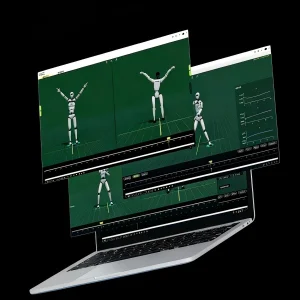
Design VDRobot Studio: Motion Data Collection&Conversion Platform for Robotics | Virdyn Planning, Solution
Explore Architecture →
Best Motion Capture Technology Opens a New Era of Animation Development Planning, Solution
Explore Architecture →
Design Virtual Actors: How the Film Industry Should Layout the Virtual Market Planning, Solution
Explore Architecture →
Best Virtual Human Live Streaming Rapidly Gaining Popularity: Motion Capture Suit Becomes a Key Tool Planning, Solution
Explore Architecture →
Design Book a Demo for VDSuit Full or mHand Pro Planning, Solution
Explore Architecture →
Best Customize Your 3D Virtual Avatar - Personalized High-Quality and Fast Delivery | 3D Custom Avatar Services Planning, Solution
Explore Architecture →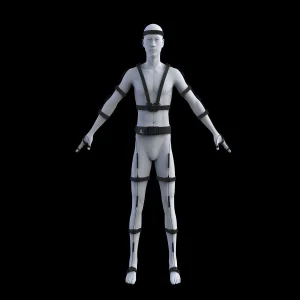
Design Virdyn VDSuit Full for Full Body Function Inertia Motion Capture Suit Planning, Solution
Explore Architecture →