<10ms
Live Engine Sub-Frame Latency
99.8%
Joint Retargeting Accuracy
60-120fps
Real-Time Maya Stream Rate
100%
Native HumanIK Compatible
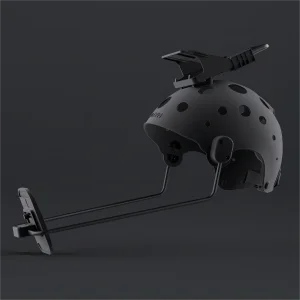
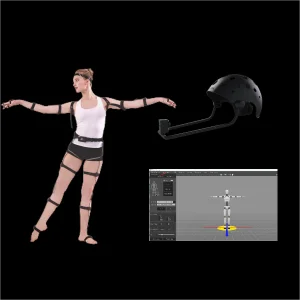
Integrated Ecosystem: Motion Capture Hardware & Core Infrastructure
Industrial-grade inertial suits, optical tracking systems, and robotic acquisition setups designed for instantaneous Maya node-graph retargeting.
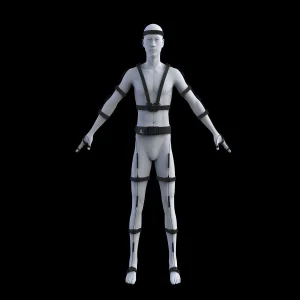
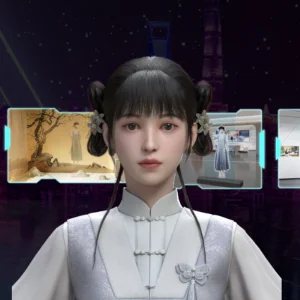
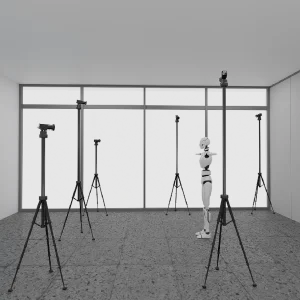
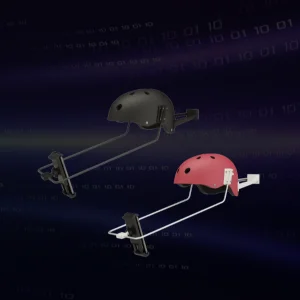

Engineering Motion Capture Maya Plugins: Architecture & Execution
Bridging sensor-fusion teleoperation, bone mapping conventions, and memory-safe C++ OpenMaya node integration.
1. The Architectural Paradigm Shift in Maya MoCap Integration
In classical VFX and 3D game pipelines, integrating motion capture data into Autodesk Maya was historically constrained to an offline, post-production file ingestion methodology. Performers wore suits or optical tracking markers, recording hours of raw motion into proprietary binary storage. After filming concluded, technicians waited for batch calibration, non-linear bone mapping, and slow FBX/BVH exports before animators could inspect the skeletal motion on rigged hero assets inside Maya's viewport.
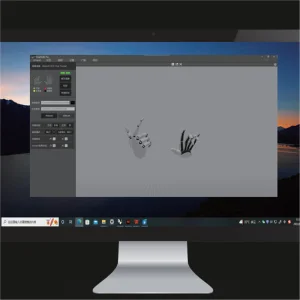
Modern studio workflows demand instantaneous, zero-latency streaming directly into Maya's DAG (Directed Acyclic Graph). Production directors, technical animators, and cinematographers now require immediate validation of physical proportions, camera framing, and skeletal collisions against virtual set geography. The modern Motion Capture Maya Plugin has shifted from a mere file importer to a real-time network protocol node engine. Utilizing custom C++ nodes written against the OpenMaya API, contemporary plugins intercept UDP/TCP data packets containing orientation quaternions and global translation vectors, solve inverse kinematics live, and write transformation matrices directly into Maya's skeletal joint hierarchies at 60 to 120 frames per second.
2. Technical Core: Sensor Fusion & Bone Re-Targeting Inside Maya
A resilient Maya mocap plugin relies fundamentally on mathematical precision during coordinate space transformation. Standard inertial motion capture (IMU) systems deliver tracking telemetry in either Z-up or Y-up right-handed Cartesian frames, structured in relative local joint quaternions. Maya's internal spatial coordinate system mandates meticulous matrix normalization to avoid catastrophic Gimbal lock or joint flip phenomena:
- Quaternion Slerp Filtering: The plugin must execute real-time Spherical Linear Interpolation (Slerp) on incoming sensor updates to mitigate packet dropout and eliminate visual jitter prior to scene evaluation.
- Zero-Reference T-Pose Calibration: Before streaming, the plugin executes an automated calibration pass, capturing joint offset rotation matrices between the actor's rest pose and Maya's bind pose, establishing clean Euler operational spaces.
- HumanIK & Custom Rig Mapping: Modern plugins interface seamlessly with Maya's embedded HumanIK (HIK) characterization solver. By assigning incoming sensor data nodes to normalized HIK definitions, animators can drive disparate character topologies—from photorealistic digital humans to stylized fantasy creatures—without manually rebinding skin weights.
- Non-Destructive Live Layer Baking: Technical directors require non-destructive recording. High-performance plugins write incoming streaming keyframes directly into independent Maya Animation Layers, allowing artists to immediately apply additive offset curves, adjust finger poses, or fix ground penetrations without corrupting the raw streaming baseline.
Low-Latency Streaming Protocols
Utilizes multi-threaded UDP sockets and OpenMaya MPxNode architecture to push raw joint matrices into the viewport with under 10ms pipeline delay, eliminating viewport freezing.
Native HumanIK Alignment
Instantaneous character definition matching that connects IMU bone streams to Autodesk Maya HumanIK character controls, allowing dynamic retargeting to any bipedal asset.
Non-Destructive Layer Baking
Record, preview, and bake incoming capture frames into additive Maya animation layers in real-time, empowering animators to sculpt high-fidelity hero motion instantaneously.
Global Enterprise Procurement Requirements
Essential criteria cross-analyzed by technical directors, lead animators, and IT procurement teams when licensing Maya mocap infrastructure.
Maya Version Lifecycle
Strict backward and forward compatibility spanning multiple annual Maya releases (2022-2026), built across Python 3 and modern Maya Devkit compiler toolchains.
Headless Studio Automation
CLI and Maya Batch support, allowing background processes to ingest, calibrate, solve, and bake animation sequences automatically without opening interactive GUI sessions.
Enterprise IP Protection
On-premise zero-cloud telemetry architecture guaranteeing zero external leakages of NDA-governed intellectual property, character geometry, or actor performance data.
Floating License Scalability
Seamless integration with RLM (Reprise License Manager) or FlexLM for elastic floating license distribution across global multidisciplinary animation departments.
Macro-Industry Deployment Blueprints
Tailored Maya motion capture plugin configurations scaled for high-throughput industry sectors.
AAA Game Cinematics & In-Game Cycles
Enables real-time streaming directly onto combat rigs inside Maya, allowing animators to verify transitions, contact points, and athletic balance before triggering batch FBX export to Unreal Engine or Unity.
VFX & Virtual Previsualization
Integrates multi-actor tracking feeds simultaneously into Maya virtual cameras. Directors compose complex multi-character blockings against high-poly scene geometry with live photorealistic lighting passes.
Embodied AI & Humanoid Robotics
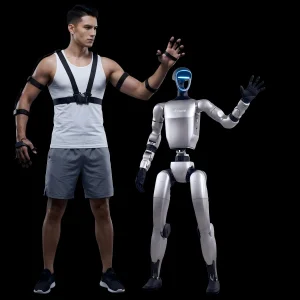
Leverages Maya's precision kinematic graph to map human demonstration datasets to humanoid mechanical joint constraints, verifying dynamic limits and torque parameters before physical hardware execution.
Localization Support, Quality & Compliance Assurance
Enterprise infrastructure demands more than software—it mandates predictable operational continuity and global technical compliance.
Global Support Framework & SLA Guarantees
Deployment of our Maya Plugin infrastructure includes dedicated Level 3 pipeline integration support. Recognizing that production downtimes cost studios thousands of dollars an hour, our technical teams provide 24/7 critical response coverage, proactive patch updates synchronized with Autodesk beta developer drops, and remote diagnostics tailored to unique proprietary rig architectures.
Furthermore, hardware compatibility is backed by complete regional compliance certifications, including FCC, CE, RoHS, and SRRC radio certifications, ensuring zero RF interference across high-density studio stages equipped with numerous wireless transmission links.
Technical Roadmap: The Future of Maya MoCap Pipelines
Anticipating next-generation technologies shaping procedural animation, neural deformation, and unified cloud streaming.
Machine Learning Foot Skating Solvers
Integration of real-time neural network nodes directly inside Maya to calculate ground-contact vectors dynamically, eradicating foot drift and sliding without manual curve cleaning.
USD Live Multi-Platform Streaming
Direct translation of incoming motion capture streams into OpenUSD (Universal Scene Description) Live stages, synchronizing Maya instances concurrently with Unreal Engine 5 and Houdini.
Native Machine Vision Markerless Ingestion
Direct camera matrix integration enabling Maya to act as an uncompressed multi-view computer vision terminal, calculating 3D human pose matrices from pure video streams with zero wearables.
Frequently Asked Technical Questions
In-depth responses covering pipeline deployment, hardware dependencies, and rig optimization.
How does the Maya mocap plugin prevent Euler angle Gimbal lock during extreme performer acrobatics?
Can the plugin synchronize finger articulation and facial blendshapes concurrently with full-body data?
What are the minimum hardware and network specifications required for stable 120 FPS live streaming into Maya?
Is the Maya plugin compatible with custom non-humanoid or stylized creature rigs?
Enterprise Motion Capture & Teleoperation Hardware Suite
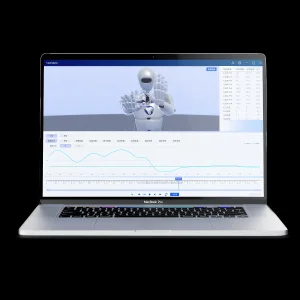
Expand studio data collection with specialized glove systems, egocentric cameras, and data analysis software.