Turnkey Low-Cost Motion Capture Systems & Hardware Hubs
Explore production-tested wearable inertial suits, finger articulate teleoperation gloves, and modular tracking suites engineered for studio pipelines and distributed AI robotics laboratories.


The Evolution of Low Cost Mocap: Democratization Through Inertial & AI Edge Fusion
How the industry shifted from capital-heavy multi-camera optical stages to agile, accessible multi-sensor ecosystems that deliver studio-grade spatial tracking at a fraction of legacy capital investment.
Phase 1: Sensor Miniaturization
Historical motion capture demanded multi-million dollar investments in dedicated darkened acoustic studios lined with infrared cameras. Modern breakthroughs in MEMS (Micro-Electro-Mechanical Systems) technology have compressed multi-axis accelerometers, solid-state gyroscopes, and magnetometers into lightweight, wearable compute nodes without sacrificing precision.
Phase 2: Kalman & Biomechanical Filters
Raw IMU data naturally accumulates positional drift. The breakthrough that allows low-cost mocap to rival high-tier optical platforms is real-time Extended Kalman Filtering (EKF) coupled with inverse kinematics (IK) biomechanical constraint algorithms. These engines filter dynamic magnetic interference and solve foot-contact slippage locally on edge devices.
Phase 3: Ubiquitous Real-Time Pipelines
Today, motion data is no longer destined strictly for offline rendering. With the explosion of generative AI, VTubing, and autonomous robotics teleoperation, capture data streams directly over low-latency TCP/UDP protocols into Unreal Engine 5, Unity, and ROS 2 nodes, transforming low-cost wearable rigs into mission-critical corporate telemetry assets.
Global Sourcing Matrix: Total Cost of Ownership (TCO) Breakdown
A granular financial comparison evaluating upfront capital expenditures (CapEx), operational overhead (OpEx), spatial requirements, and labor dependencies across modern mocap modalities.
| Evaluation Parameter | Virdyn Low-Cost Inertial Solution | Traditional Marker-Based Optical Rig | Vision AI Markerless System |
|---|---|---|---|
| Initial CapEx Budget | $2,500 – $8,500 (Full body suit + gloves + software) | $45,000 – $180,000 (Multi-camera array + truss + PC) | $3,500 – $12,000 (Multi-RGB/Depth camera setup) |
| Spatial Footprint & Facility | 0 sq. ft. required (Operates in living rooms, offices, outdoors) | 500 – 2,000 sq. ft. dedicated truss studio needed | 150 – 400 sq. ft. with clean visual background |
| Occlusion Vulnerability | Zero Occlusion: Operates inside props, vehicles, or crowd scenes | High: Hidden markers drop out, causing bone snapping | Medium-High: Severe degradation during limb cross-over |
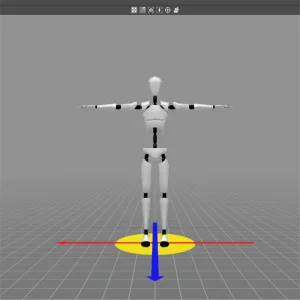
| Calibration & Turnaround | Under 3 minutes (Basic T-pose / A-pose stance) | 30 – 60 minutes (Wand waving, spatial volume recalibration) | 5 – 10 minutes (Multi-view extrinsic camera sync) |
| Labor & Operator Cost | Single solo actor/streamer can self-operate | Requires dedicated mocap technician & cleanup artist | Single operator required |
| Data Cleaning Overhead | Minimal (Real-time IK solved in VDMocap Studio) | High (Manual marker labeling & gap filling) | Medium (Jitter filtering & temporal smoothing needed) |
Rapid Amortization
For mid-tier game studios and digital human agencies, an inertial suit pays for itself within two project production cycles compared to renting hourly mocap volume facilities or paying third-party cleanup service bureaus.
Elastic Scaling
University animation programs and robotics labs can acquire 10 to 15 full VDSuit units for the capital cost of a single optical tracking ring, allowing entire cohorts to capture human telemetry simultaneously.
Zero Downtime Agility
Wearable inertial nodes do not require environmental re-calibration if temperature, sunlight, or studio lighting changes, ensuring seamless all-day live streaming and uninterrupted robot training datasets.
Macro Industry Solutions: Integrated Pipelines for High-Growth Sectors
From digital brand ambassadors to embodied AI teleoperation, low-cost mocap planning bridges the physical-digital boundary across distinct enterprise domains.
1. Indie & AA Games
Equip narrative and action design teams with immediate in-editor preview. Stream raw FBX/BVH motion skeletons directly onto custom Metahuman or Unity characters to block gameplay mechanics, combat cycles, and cutscenes within minutes instead of hand-keyframing for weeks.
2. Virtual Streaming
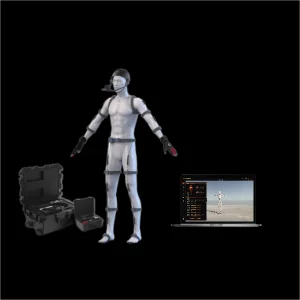
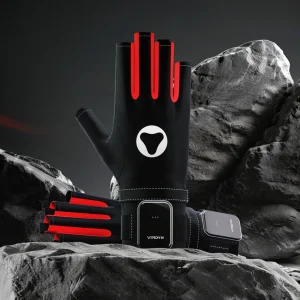
Empower VTuber talent agencies and commercial e-commerce channels with zero-drift, 2.4GHz wireless tracking. Pair VDSuit Full with mHand Pro gloves to execute fluid finger gesturing and natural posture interaction across Warudo, VSeeFace, and VRChat via OSC.
3. Embodied AI & Robotics
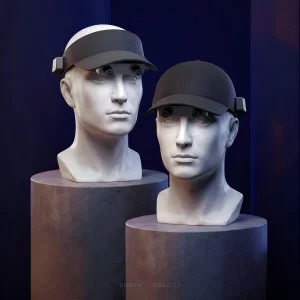
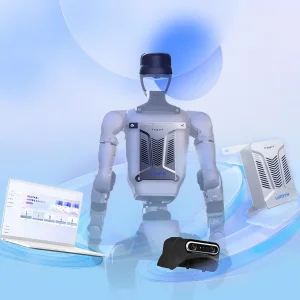
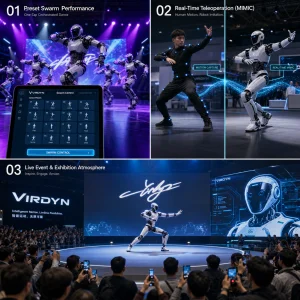
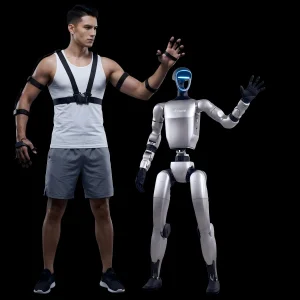
Train bi-pedal and humanoid end-effectors via human imitation learning. Low-cost half-body systems (VDSuitMini) paired with egocentric FPV cameras (VDEgo) capture high-frequency joint angle data for teleoperating robots and building reinforcement learning action libraries.
4. Biomechanics & Sports
Leverage inertial sensor packages with Valyze evaluation engines for non-invasive sports gait analysis, workplace ergonomics assessment, and physical therapy monitoring outside the clinical laboratory without hindering athletic motion.
Localized Global Support, Data Governance & Compliance
Navigating cross-border enterprise deployments requires rigorous adherence to telecommunications compliance, military-grade telemetry encryption, and standardized warranty infrastructure.
RF & Telecommunication Compliance
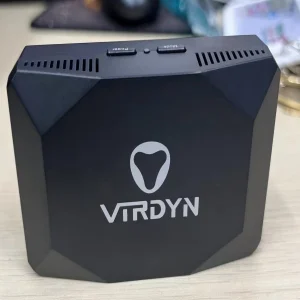
Virdyn wireless transceivers are certified under CE, FCC, RoHS, and SRRC international regulatory standards. Operating on adaptive frequency-hopping 2.4GHz bands, the sensor units avoid interference with studio Wi-Fi 6 networks, micro-wireless lavaliers, and corporate telecommunications backbones.
Data Privacy & Air-Gapped Security
For defense, medical, and proprietary film pre-visualization workflows, VDMocap Studio operates completely offline. No biometric telemetry, skeletal coordinates, or actor identification files are ever piped to third-party public clouds, fulfilling strict SOC 2 and GDPR enterprise privacy mandates.
SLA & Global Replacement Logistics
Enterprise purchase agreements include dedicated technical engineers providing remote pipeline onboarding within 24 hours. Hardware nodes are modularly hot-swappable; damaged individual IMU sensors can be detached and replaced without discarding the entire garment, drastically lowering maintenance cycles.
Technical Roadmap: Where Next-Gen Low-Cost Mocap Is Heading
Tracking the convergence of Neural Radiance Fields (NeRF), 3D Gaussian Splatting, and embodied foundation models with inertial wearable sensing.
Edge Neural Fusion
Integrating on-chip micro transformer models directly inside wearable hubs to predict positional contact foot-skating with 99.4% ground-plane accuracy without external optical positioning beacons.
Hybrid Gaussian Mocap
Combining monocular phone RGB streams with sparse 9-axis inertial suits to generate volumetric real-time 3D Gaussian dynamic rigs, rendering studio optical tracking rooms obsolete for virtual cinema.
Robotic VLA Integration
Direct native streaming to Vision-Language-Action (VLA) AI models, standardizing human motion datasets across billions of teleoperated robotic manipulation tokens worldwide.
Zero-Weight Smart Textiles
Transitioning from discrete hard-shell sensor nodes to conductive graphene thread and woven piezo-resistive fiber sensors woven directly into everyday athletic wear.
Low-Cost Motion Capture Planning: Engineering FAQ
Answers to mission-critical questions formulated by senior technical directors, lead animators, and autonomous robotics researchers.
Virdyn integrates multi-frequency sensor fusion with intelligent magnetometer recalibration. When metallic interference or reinforced rebar is detected, the algorithm temporarily weights dynamic gyroscope integration and biomechanical joint angle limits over magnetic heading, preventing erratic skeletal twitches.
Inertial suits calculate global displacement via double-integration of acceleration, which is susceptible to drift over long takes. VDMocap Studio mitigates this through Zero Velocity Update (ZUPT) contact detection algorithms. For infinite boundless navigation, studios pair our inertial suits with external floor anchors, SteamVR trackers, or camera-based SLAM.
Under direct wireless USB transceiver connection, the hardware sensor-to-hub transmission latency is typically under 12 milliseconds. Our native Live Link plugins for UE5 process and retarget bones on the render thread, delivering a total end-to-end latency below 20 milliseconds at 60Hz/120Hz refresh rates.
Multiple actors wearing VDSuit suits can operate simultaneously on separate assigned wireless frequency channels within the same physical space. Because inertial tracking relies on worn nodes rather than line-of-sight cameras, actors can perform grappling, hugging, and rolling stunts with zero occlusion loss.
Virdyn suits feature detachable strap and velcro node harness architectures. All electronic sensor modules, hubs, and wiring harnesses can be unclipped in under two minutes, allowing the breathable antibacterial textile base layer to be hand-washed or sanitized between performer sessions.
Yes. VDMocap Studio natively exports industry-standard raw and smoothed FBX, BVH, and CSV skeletal hierarchy files. Standard T-pose and HumanIK naming conventions ensure zero-remapping imports directly into Maya, Blender, 3ds Max, and MotionBuilder character pipelines.
Full Pipeline Hardware, Egocentric Vision & AI Integration Suites
Complete your motion capture setup with full-body inertial suits, head-mounted egocentric capture units, AI interaction systems, and advanced multi-track studio software.