
Integrated Spatial Capture & Teleoperation Hardware
Explore commercial-grade wearable inertial capture suits, precision data gloves, facial telemetry systems, and digital twin toolchains engineered for high-throughput deployment.
Design Virdyn VDMocap Studio Plus Motion Capture Software System for VDSuit Full Planning, Solution
View Solution
Design Virtual Host Technology: Help Mainstream Media Layout Virtual Reality Industry Planning, Solution
View Solution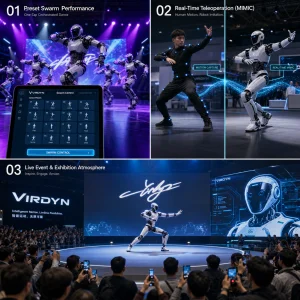
Best Virdyn Humanoid Robot Live Event Performance Solution for Robot ce&Teleoperation Planning, Solution
View Solution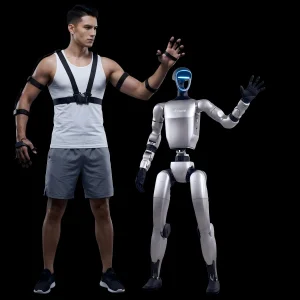
Best VDSuitMini Half-Body Mocap System | Robot Data Collection & Teleoperation | Free Software Planning, Solution
View Solution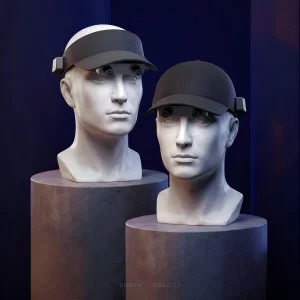
Design VDEgo - Egocentric Video Data Collection Service at Scale | FPV Head-Mounted Camera Planning, Solution
View Solution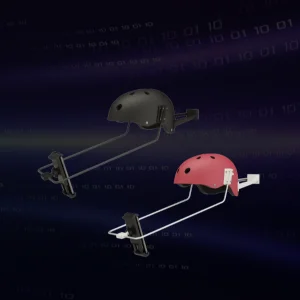
Best Virdyn VDFace Capture System for Real Time Facial Capture with Face Capture Helmet Planning, Solution
View Solution
Design Virtual Human Technology: Digital Human Activation Brand Marketing New Path Planning, Solution
View Solution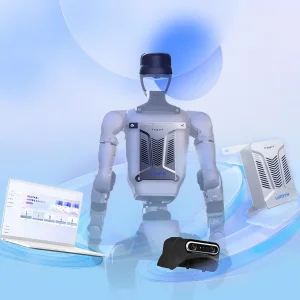
Design AI LingSi System | Robotic Intelligent Creation Platform & Intelligent Voice Interaction Planning, Solution
View SolutionThe Paradigm Shift in Hand-Kinematic Spatial Computing
In virtual reality (VR), spatial computing, and digital human avatar synthesis, the human hand represents the primary conduit for agency, fine motor control, and psychological presence. Early generation VR systems relied heavily on rigid, handheld controllers offering basic six-degree-of-freedom (6DoF) spatial tracking combined with binary mechanical triggers. While sufficient for consumer entertainment, these primitive input vectors fail fundamentally in enterprise training, surgical pre-visualization, aerospace ergonomics, and robotic teleoperation, where fine motor dexterity, biomechanical fidelity, and haptic counter-resistance are mission-critical.
The engineering challenge of designing motion capture gloves (mocap gloves) for VR environments resides in resolving the intense physical conflict between high-density sensor integration, ultra-low-latency wireless telemetry, ergonomic breathability, and absolute magnetic field resilience. Modern VR glove engineering has transitioned away from fragile optical-fiber flex cables toward distributed nine-axis inertial measurement units (9-DOF IMUs), carbon-nanotube stretch arrays, and integrated vibro-tactile actuators capable of mapping multi-joint flexion, abduction, and micro-movements in real time without camera occlusion.
"Precision hand kinematics is the missing sensory bridge between virtual simulation and physical competence. When an engineer or surgeon interacts with a sub-millimeter digital twin, the latency must stay beneath the human vestibular-somatosensory perception threshold of 10 milliseconds."
Macro Dynamics Driving Enterprise Mocap Glove Adoption
Analyzing the convergence of high-bandwidth spatial engines, embodied AI research, and military-grade virtual training environments.
1. Convergence of Embodied AI & Human Teleoperation
Humanoid robotics manufacturers and AI foundation model research teams require petabytes of real-world dexterous manipulation data. Wearable mocap gloves record ground-truth human demonstration datasets—such as fine tool assembly, delicate wiring, and surgical grasping—providing high-fidelity trajectory inputs for imitation learning (IL) and reinforcement learning (RL) policies.
2. Zero-Occlusion Inertial & Optical Hybrid Tracking
Traditional optical marker systems suffer catastrophic signal dropout when fingers fold into fists or interlock behind physical assemblies. Next-generation systems leverage inertial-optical fusion architectures, where multi-axis IMU nodes maintain uncompromised continuity inside closed fists, while external spatial references correct low-frequency drift.
3. Native Real-Time OpenXR & Engine Sockets
Proprietary closed SDKs are giving way to open spatial standards. Enterprises demand turnkey plugins for Unreal Engine 5.4+ (Live Link), Unity OpenXR skeletal mesh standards, Autodesk Maya, and WebXR APIs, enabling single-click kinematic retargeting without custom middleware translation layers.
Engineering Specifications & Kinetic Planning Solutions
Architecting an enterprise-ready VR mocap glove demands meticulous design choices across four fundamental subsystems: sensor morphology, data-fusion algorithms, RF telemetry pipelines, and ergonomic mechanical framing.
1. Sensor Modality Matrix: Comparative Performance
A rigorous understanding of tracking modalities is critical when provisioning hardware for complex simulation workflows:
| Technology Type | Angular Precision | Occlusion Vulnerability | Magnetic Sensitivity | Target Use Case |
|---|---|---|---|---|
| High-G 9-Axis IMU Sensor Nodes | ±0.15° per articulation | Zero (Immune to visual blocks) | Mitigated via EKF & Kalman Filters | Freeform field simulation, VTubing, robotics teleop |
| Conductive Nanomaterial Flex Arrays | ±1.2° bend threshold | Zero (Textile embedded) | Completely Immune | High-wear industrial assembly, heavy tactile handling |
| Optical Passive Retroreflective Markers | ±0.05 mm absolute positional | High (Severe during finger crossing) | Completely Immune | Biomechanics labs, fixed-volume motion capture stages |
| Inertial-Optical Hybrid Fusion (Virdyn Stack) | Sub-millimeter combined | Near Zero (IMUs take over during loss) | Auto-recalibrating dynamic offset | Mission-critical aerospace, defense, surgical VR |
2. Sensor Fusion & Extended Kalman Filtering (EKF)
The primary vulnerability of standalone inertial measurement units is cumulative integration drift over time, exacerbated by local ferromagnetic anomalies (e.g., steel building frames, machinery, VR headset batteries). Virdyn solves this using a specialized 16-state Extended Kalman Filter (EKF) running embedded at 200Hz. By coupling biological kinematic constraints—such as biomechanically impossible hyperextensions and inter-phalangeal velocity limits—the algorithmic solver dynamically filters anomalous magnetometer readings and prevents joint collapsing or phantom snapping.
3. Wireless Protocol & RF Channel Allocation
Standard Bluetooth Low Energy (BLE) suffers from congested 2.4GHz bands and packet latency spikes in corporate Wi-Fi dense facilities. Industrial VR mocap glove solutions implement proprietary ultra-wideband (UWB) or dedicated 2.4GHz GFSK frequency-hopping protocols capable of sustaining a rock-solid 120Hz-200Hz throughput with jitter below 1 millisecond across multi-actor configurations.
End-to-End Vertical Industry Solutions
Comprehensive application blueprints deployed across mission-critical aerospace, digital factories, healthcare, and digital human production.
Aerospace & Defense Flight Cockpit Simulation
Military pilots and aerospace engineers interact with 1:1 photorealistic digital cockpits. Gloves provide sub-millimeter finger tracking for toggle switches, throttle controls, and instrument consoles, allowing complete muscle memory training without constructing multi-million-dollar physical hardware simulators.
Surgical Pre-Operative Planning & Skill Analysis
Orthopedic, neurosurgical, and laparoscopy trainees perform high-fidelity dry-runs in stereoscopic VR. High-frequency joint angle telemetry maps tremor, hand steadying, and instrument rotation angles, feeding procedural analytics into hospital compliance management platforms.
Humanoid Robotic Teleoperation & Embodied AI
Operators donning Virdyn mocap gloves guide five-finger dexterous robotic end-effectors in hazardous environments (nuclear remediation, space assembly). Direct joint-angle streaming mapped via inverse kinematics enables micro-manipulation of vials, bolts, and circuit boards.
Automotive Assembly Line Digital Twin Ergonomics
Automobile manufacturers validate line worker reach envelopes, posture strain, and clearance inside car chassis before physical tooling is cut. Mocap gloves capture grasp strain, wrist torque angles, and cycle repetitions directly into Siemens Jack and Dassault Delmia systems.
Virtual Production, Film & VTuber Avatar Broadcasts
Motion capture studios stream seamless finger articulation for Unreal Engine MetaHumans and broadcast VTubers. Live gesture recognition triggers automated prop bindings, facial expression blendshapes, and secondary physics simulations in zero-latency live production environments.
Global Compliance, Safety Standards & Local Integration
Enterprise procurement departments must ensure that any deployed wireless wearable meets stringent jurisdictional safety, spectrum, and data privacy mandates across North America, Europe, and Asia-Pacific.
1. Spectrum Allocation & Radio Frequency Certifications
Virdyn's enterprise communication hardware strictly aligns with localized RF spectrum restrictions:
- FCC Part 15 Class B (United States): Certified for radiated and conducted emissions to operate inside hospital labs and corporate IT environments without radio interference.
- CE RED (Radio Equipment Directive 2014/53/EU): Full European regulatory compliance for wireless RF power density, electromagnetic immunity (EN 301 489), and operator SAR absorption limits.
- RoHS & REACH Compliance: Completely free from restricted hazardous substances, ensuring sustainable lifecycle management and skin-safe medical-grade hypo-allergenic fabric liners.
2. On-Premise Air-Gapped Data Security
For aerospace, military, and proprietary AI research customers, commercial cloud telemetry dependencies represent an unacceptable IP leak vulnerability. Virdyn delivers a 100% air-gapped SDK architecture. All biometric skeletal data, IMU calibration coordinates, and positional vectors process locally on host workstations through localized C++ / Python SDKs without outbound WAN pinging or cloud subscription dependencies.
Technology Roadmap: The Next Era of Kinetic Capture (2026–2030)
Anticipating next-generation material science, micro-fluidic actuators, and edge neuromorphic intelligence.
Micro-Fluidic Active Force Feedback
Moving beyond eccentric mass vibration (ERM) motors, upcoming hardware generations incorporate pneumatically driven micro-capillary bladders. These generate variable resistive force against the fingertips, simulating the distinct density of steel, human tissue, and rubber objects in VR space.
Neuromorphic Event-Based Sensor Nodes
Replacing fixed-interval polling loops with asynchronous event-driven silicon. Sensors only transmit signals upon detecting kinetic state changes, slashing power draw by 70% and pushing tracking latency under 1 millisecond for ultra-fast reflex simulations.
Stretchable Monolithic Electronic Skin
Eliminating discrete PCB modules and wiring harnesses entirely. Conductive liquid-metal circuit pathways screen-printed directly onto elastomeric Lycra-spandex deliver uninhibited mobility, complete machine washability, and long-term durability in high-throughput enterprise deployments.
Frequently Asked Questions on VR Mocap Glove Engineering
In-depth technical answers for procurement directors, simulation engineers, and R&D architects.
Virdyn integrates multi-axis sensor fusion coupled with a real-time magnetic anomaly rejection algorithm. Unlike standard magnetometers that distort near steel beams, the system uses the 6-axis gyro/accelerometer vector as primary orientation and limits magnetic correction to steady states. In heavily shielded spaces, a zero-magnetic pure-inertial mode can be toggled via software.
Yes. Virdyn provides native SteamVR tracker emulation and OpenXR Hand Tracking bindings. By mounting a VIVE Tracker, Meta Quest controller bracket, or optical marker cluster on the wrist base, the system marries 6DoF global spatial placement with 16DoF articulate finger kinematics.
The system utilizes an automated 5-second dynamic calibration workflow. The operator performs an open-palm flat pose followed by a closed-fist squeeze. Internal auto-scaling algorithms calculate individual phalangeal segment lengths and joint zero-offsets instantaneously.
Through Virdyn's Live Link plugin, data streams as a standard skeletal bone hierarchy over UDP/IP sockets. Rotations map directly onto standard OpenXR or UE5 Mannequin finger bones, allowing real-time character preview and direct recording via Take Recorder.
Equipped with onboard high-density lithium polymer cells, the gloves achieve 4.5 to 6 hours of continuous 120Hz wireless transmission. Fast-charging via USB-C reaches 80% capacity in 35 minutes, supporting hot-swap rotation schedules.
Advanced Production, Teleoperation & Optical Ecosystem
Integrate markerless optical rigs, facial telemetry helmets, virtual actor pipelines, and robotic data suits into your simulation workflow.

Best Virtual Human Live Streaming Rapidly Gaining Popularity: Motion Capture Suit Becomes a Key Tool Planning, Solution
Explore Solution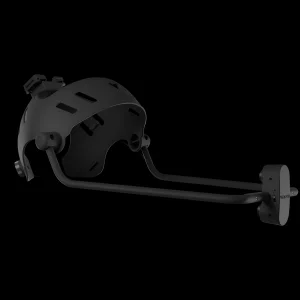
Design AH Double Camera-Based Face Capture Helmet With HD 1080p Embedded RGB Camera Planning, Solution
Explore Solution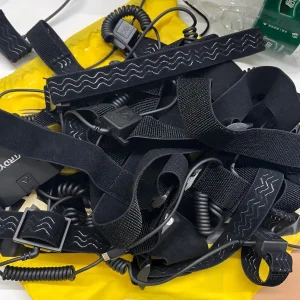
Best Full Body Motion Capture Accessories for Suit Elastic Tapes Planning, Solution
Explore Solution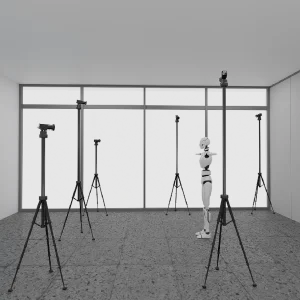
Best Camera Optical Markerless Motion Capture Solution - Virdyn YanDong | Real-Time Full Body, Hands, Face Planning, Solution
Explore Solution
Design Book a Demo for VDSuit Full or mHand Pro Planning, Solution
Explore Solution
Best Customize Your 3D Virtual Avatar - Personalized High-Quality and Fast Delivery | 3D Custom Avatar Services Planning, Solution
Explore Solution
Design Virtual Actors: How the Film Industry Should Layout the Virtual Market Planning, Solution
Explore Solution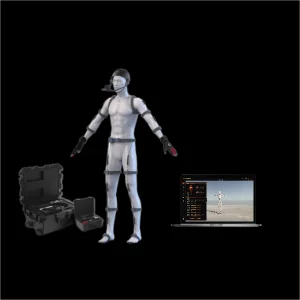
Design DreamsCap X1 Full-Body, Hand & Face Motion Capture for Humanoid Robot Data Collection & Teleoperation Planning, Solution
Explore SolutionInitiate Your Spatial Computing Pipeline Today
Whether you are provisioning high-density pilot suites for military spatial simulation, training embodied AI robotic agents, or architecting broadcast virtual production studios, our senior systems engineering team provides comprehensive feasibility studies, hardware evaluation units, and localized architectural consultation.