
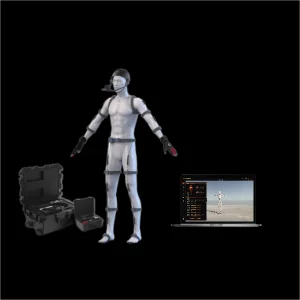
Hardware Catalog · Part I
Featured Mocap Hardware & Live Integration Kits
Deploy industrial-grade inertial sensors, multi-node finger teleoperation, and HD facial tracking designed natively for high-frame-rate social broadcasting.
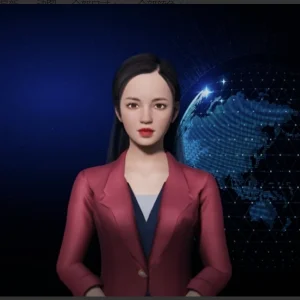
Design Virtual Host Technology: Help Mainstream Media Layout Virtual Reality Industry Planning, Solution
Explore Specification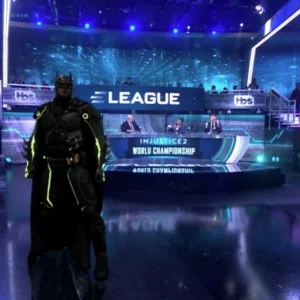
Design Motion Capture Provides Advanced Technology Tools for Virtual Film Production Planning, Solution
Explore Specification
Design Virtual Actors: How the Film Industry Should Layout the Virtual Market Planning, Solution
Explore Specification
Design Book a Demo for VDSuit Full or mHand Pro Planning, Solution
Explore Specification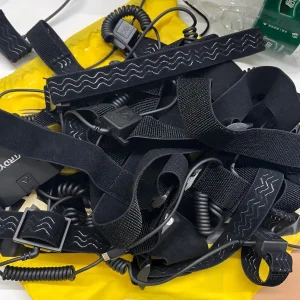
Best Full Body Motion Capture Accessories for Suit Elastic Tapes Planning, Solution
Explore Specification
Design Motion Capture Technology to Help the Development of Creative Advertising with Realistic Effects Planning, Solution
Explore Specification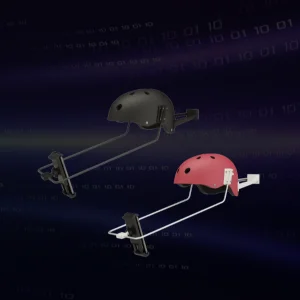
Best Virdyn VDFace Capture System for Real Time Facial Capture with Face Capture Helmet Planning, Solution
Explore SpecificationIndustrial Status & Market Dynamics
The Strategic Convergence: Motion Capture & TikTok Live Algorithms
Short-form vertical video and hyper-interactive live broadcasts have radically reshaped the global entertainment economy. Discover why enterprise digital human streaming outpaces traditional live broadcasting in audience engagement, brand loyalty, and algorithmic retention.
< 18ms
Wireless Sensor-to-Engine Latency
340%
Average Retention Lift in 3D Live Shows
24/7
Operational Capability for E-Commerce Avatars
10+
Seamless Engine & DCC Integrations
Global Enterprise Procurement Surge
Global brands, digital agencies, and VTuber talent incubators across North America, East Asia, and Western Europe are actively procuring wearable inertial motion capture systems. Unlike rigid optical volumes that require dedicated square footage and complex optical calibration, modern inertial mocap empowers cross-border live streaming studios to operate out of flexible commercial suites without line-of-sight occlusion risks.
TikTok Live Algorithmic Advantage
TikTok's recommendation engine heavily rewards real-time user-creator feedback loops. When digital human avatars react instantaneously to viewer gifts, chat messages, and virtual coin drops with expressive hand choreography and facial gestures, live streams experience a statistically verified increase in average watch duration, direct checkout conversions, and high-frequency stream indexing.
Industrial Scale & Cost Rationalization
Deploying professional motion capture drastically reduces traditional animation costs. Rather than spending weeks keyframing viral dance movements and short-form TikTok content, motion tracking captures authentic human physical emotion in real time. The resulting live telemetry is routed directly into real-time rendering pipelines, driving the unit economics of virtual influencers to unmatched profitability.
Architectural Blueprint
End-to-End TikTok Real-Time Live Streaming Topology
A battle-tested zero-latency pipeline connecting hardware kinematics, neural sensor fusion, DCC retargeting, and RTMP ingestion for TikTok Live Studio.
LAYER 01
Kinematic Capture
High-frequency 9-axis AHRS/IMU sensors sample 3D rotational acceleration, angular velocity, and heading vectors at 120Hz-200Hz across all anatomical joints.
LAYER 02
Sensor Fusion & Drift Filter
Proprietary Kalman filtering and magnetic anomaly suppression algorithmically eliminate electrostatic and electromagnetic environmental distortions.
LAYER 03
Biomechanical Retargeting
VDMocap Studio resolves joint constraints and bone scaling, streaming zero-lag skeletal data over TCP/UDP sockets to Unreal Engine 5, Unity, or Warudo.
LAYER 04
Render & Compositing
Virtual cameras, AR shaders, dynamic particle physics, and real-time lighting interact with the performer's movements in native 9:16 vertical viewport resolutions.
LAYER 05
TikTok Studio Ingestion
Low-latency video feed is piped via Spout or virtual webcam interfaces directly into TikTok Live Studio, maintaining pristine 1080x1920 60FPS video bitstreams.
Enterprise Implementation Blueprint: The 9:16 Vertical Video Challenge
Standard cinematic motion capture workflows are built for horizontal 16:9 aspect ratios. Adapting this technology to TikTok requires precise spatial planning. Virtual performer volume must be optimized vertically: performers frequently engage in high-energy choreography, floor drops, and rapid finger pointing. Virdyn's full-body suite utilizes dedicated contact detection algorithms that resolve foot sliding, floor clipping, and rapid joint rotations without requiring external optical reference beacons, ensuring flawless streaming stability throughout 8-hour continuous broadcasts.
Hardware Engineering Benchmark
Motion Tracking Modality Comparison for TikTok Live Operations
Understanding the engineering trade-offs between wearable inertial sensors, optical marker arrays, and computer vision markerless systems.
| Evaluation Parameter | Virdyn Inertial IMU Suit | Optical Marker Systems | Single/Multi-Camera Markerless |
|---|---|---|---|
| Studio Footprint & Space | Minimal: Any typical live room, zero truss needed | Rigid: Requires 4x4m+ calibrated volume & truss | Moderate: Requires unhindered visual angles |
| Occlusion Immunity | 100% Occlusion Proof: Sensors stay on body | Prone to loss when markers cross or hide | High Failure Rate during fast spins and turns |
| Finger Dexterity (Mocap Gloves) | Multi-Node Precision: Per-finger strain/IMU tracking | Heavy marker sets required on fingertips | Unreliable in complex finger overlap scenarios |
| Setup & Calibration Time | < 3 Minutes: Wear suit, execute T/A-pose | 20–45 Minutes: Camera calibration & wanding | 1–5 Minutes: Subject standing detection |
| Latency (Perception to Output) | < 15ms: Direct 2.4GHz wireless / RF transmission | < 10ms: Ultra-fast optical processing | 40–90ms: Heavy neural network compute latency |
| Total Cost of Ownership (TCO) | High ROI: Scalable hardware, accessible licensing | Prohibitive: High upfront CAPEX for cameras | Low initial hardware, high GPU requirement |
Future Horizon 2026–2030
Technological Roadmap: The Next Era of Synthetic Social Media
Exploring the intersection of Embodied AI, multimodal Large Language Models (LLMs), Gaussian Splatting, and neural kinematic motion synthesis.
AI-Enhanced Retargeting & Auto-Physics
By integrating deep reinforcement learning into inverse kinematics (IK) solvers, future motion capture suits will automatically predict and simulate clothing physics, hair dynamics, and weight momentum on virtual TikTok avatars in real time, bridging the uncanny valley without manual rigger intervention.
Autonomous Hybrid Streaming Systems
Human performers cannot broadcast 24/7. The next frontier combines real human performance capture for peak prime-time streams with autonomous LLM-driven audio-to-gesture neural models during off-peak hours. The motion data collected during live shows acts as ground truth training sets for proprietary brand avatars.
Embodied AI & Dual-Purpose Deployments
Motion tracking equipment procured for TikTok content creation serves a secondary industrial mission: training robotics systems. High-dexterity hand telemetry recorded via mHand Pro gloves feeds demonstration datasets to humanoid robotics teams, amortizing corporate hardware investments across marketing and R&D divisions.
Reliability & Governance
Global Procurement, Localization & Regulatory Compliance
Ensuring mission-critical reliability for live social broadcasts through international certification, RF safety, and dedicated worldwide technical support.
RF Spectrum Compliance
Hardware adheres strictly to FCC (USA), CE-RED (Europe), and TELEC (Japan) wireless standards, operating on dynamic 2.4GHz frequency hopping to prevent stream cutoffs in congested Wi-Fi environments.
Continuous Thermal Endurance
IMU sensors and glove nodes are engineered for prolonged live broadcasting sessions. High-capacity lithium polymer batteries and passive heat-dissipating casings ensure up to 6–8 hours of nonstop streaming runtime.
Global SLA & Support
Procuring teams receive 24-hour response SLAs, remote software diagnostics, and rapid hardware hot-swap replacement support, minimizing broadcast downtime and protecting commercial advertising deliverables.
SDK & Custom Protocol
Full access to C++, C#, and Python SDKs allows custom live-streaming pipelines to tie mocap inputs directly into TikTok comment APIs, triggering automated physical reactions to superchats and fan subscriptions.
Hardware Catalog · Part II
Advanced Inertial Suits, Gloves & Robotic Capture Kits
Expand your production ecosystem with full-body inertial suits, facial tracking helmets, and egocentric camera solutions trusted by industry leaders worldwide.
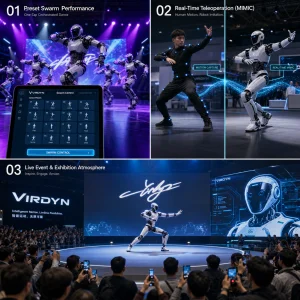
Best Virdyn Humanoid Robot Live Event Performance Solution for Robot Dance&Teleoperation Planning, Solution
Explore Specification
Best Motion Capture Technology Opens a New Era of Animation Development Planning, Solution
Explore Specification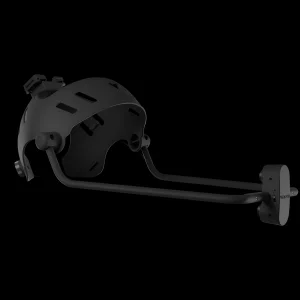
Design AH Double Camera-Based Face Capture Helmet With HD 1080p Embedded RGB Camera Planning, Solution
Explore Specification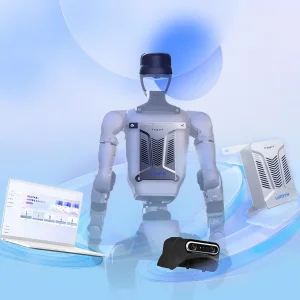
Design AI LingSi System | Robotic Intelligent Creation Platform & Intelligent Voice Interaction Planning, Solution
Explore Specification
Design Inertial Motion Capture Technology to Help the Game Development and Production Planning, Solution
Explore Specification
Best Virtual Human Live Streaming Rapidly Gaining Popularity: Motion Capture Suit Becomes a Key Tool Planning, Solution
Explore Specification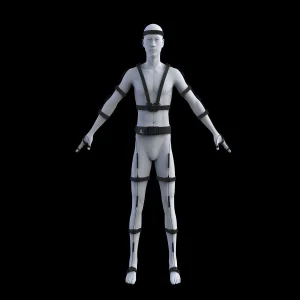
Design Virdyn VDSuit Full for Full Body Function Inertia Motion Capture Suit Planning, Solution
Explore Specification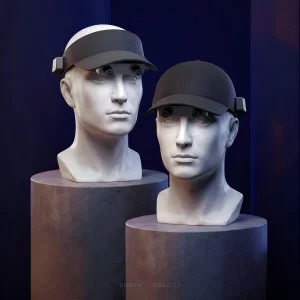
Design VDEgo - Egocentric Video Data Collection Service at Scale | FPV Head-Mounted Camera Planning, Solution
Explore SpecificationExecutive Inquiries & Answers
Frequently Asked Questions: TikTok Motion Capture Deployments
Technical, operational, and commercial insights compiled by Virdyn's lead solutions architects.
How does inertial mocap overcome magnetic interference in dense urban broadcasting studios?
Commercial studios often contain steel reinforced concrete floors, broadcast consoles, and heavy electrical cabling. Virdyn’s sensor nodes integrate advanced magnetometer calibration matrices paired with adaptive heading fusion. When the system detects local magnetic distortion, the algorithm temporarily transitions to high-frequency gyro-inertial integration, eliminating drift and keeping the TikTok avatar grounded and upright.
What is the latency threshold required for real-time TikTok Live viewer interaction?
To foster real-time immersion where an avatar reacts dynamically to incoming TikTok comments, stream donations, and PK battles, total round-trip latency (mocap hardware sensor read -> game engine solver -> video encoder -> TikTok ingest) must remain under 80 milliseconds. Virdyn's VDSuit hardware achieves an internal transmission latency of under 15ms, leaving abundant processing budget for Unreal Engine or Unity rendering passes.
Can a single operator manage the full-body suit, gloves, and facial tracking simultaneously?
Yes. Virdyn's software ecosystem (VDMocap Studio) synchronizes full-body inertial data from the VDSuit, finger articulation from mHand Pro gloves, and 52 ARKit blendshapes from the VDFace helmet into a unified data hub. One technician or streamer can calibrate the entire system within three minutes using standard hotkey presets.
How does the system interface with TikTok Live Studio without third-party capture cards?
The render engine (Unreal Engine, Unity, Warudo, or Blender) outputs a direct 1080x1920 video stream through a high-bandwidth memory sharing protocol (Spout2) or a zero-overhead virtual camera driver. This virtual camera is recognized natively by TikTok Live Studio or OBS as an active camera source, preserving pristine chromatic clarity without compression artifacts.
Can the mocap suit handle fast-paced choreography and viral TikTok dance trends?
Yes. The sensor modules feature dynamic measurement ranges up to ±2000°/s angular velocity and ±16g acceleration. This dynamic range accommodates rapid footwork, high-velocity arm waving, flips, and energetic dance routines without sensor saturation or skeletal inversion.
What return on investment (ROI) can digital agencies expect from motion capture live rooms?
Traditional live streaming agencies incur substantial recurring costs for studio set leases, physical decor, and lighting crews. A virtual mocap live streaming room requires only a 3x3m footprint and an off-the-shelf gaming PC. Virtual influencers driven by mocap achieve 2.5x to 4x higher audience retention during product showcases, dramatically lowering cost-per-acquisition (CPA) on TikTok Shop.