
Integrated Coaching Solutions: Deployment Suite 01
Explore our advanced sensor suits, visual analysis pipelines, and intelligent interfaces engineered for real-time biomechanical assessment and athletic motor-skill optimization.

Macro-Industry Dynamics & The Quantitative Coaching Paradigm
The global sports coaching and biomechanical assessment industry is transitioning from qualitative observational methodologies to high-frequency, sensor-fused quantitative kinematic analytics.
From Intuition to Evidence-Based Pedagogy
Traditional athletic coaching has historically relied on the naked human eye, subjective interpretation, and non-synchronized 2D video replay operating at limited frame rates (30–60 FPS). Motion capture platforms establish an absolute baseline of ground-truth kinematic data, extracting multi-planar joint angles, angular velocities, and segmental acceleration curves that remove human observational bias entirely.
The Emergence of Field-Deployable Inertial Mocap
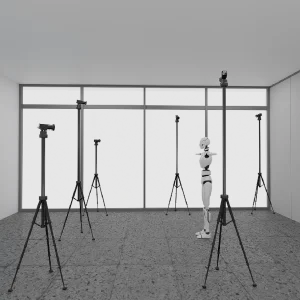
While marker-based optical camera volumes remain the gold standard inside controlled laboratory environments, their operational footprint—costly multi-camera rigs, occlusions in multi-athlete scenarios, and lengthy calibration procedures—restricts coaching in live training conditions. Wearable 9-axis IMU setups eliminate camera bounding boxes, enabling instantaneous deployment on grass, ice, courts, and real-world tactical environments.
Convergence with Digital Human Twins & Robotics
Modern coaching data transcends basic diagnostic charts. By cross-leveraging skeletal orientation datasets with dynamic musculoskeletal models (OpenSim) and real-time visualization engines (Unity, Unreal Engine), coaching organizations construct 3D digital athletic twins. This structural continuity also bridges high-dexterity robotics data collection and embodied AI training for rehabilitation exoskeletons.
Commercial Status & Industrial Infrastructure
How Tier-1 athletic organizations, Olympic federations, military conditioning programs, and orthopaedic clinics systematically integrate motion capture into everyday operations.
Tier-1 Sports Academies & Franchises
Global soccer, baseball, golf, and basketball leagues integrate mocap systems into daily athletic monitoring. Pitching mechanics, golf swing rotations, and sprinting kinematics are measured continuously. Coaches isolate micro-compensations that precede soft-tissue strains, protecting multi-million-dollar athletic contracts through predictive intervention.
Orthopaedic & Physical Rehabilitation Centers
Post-operative recovery protocols for anterior cruciate ligament (ACL) reconstructions and total joint arthroplasties are shifting to quantitative gait and movement symmetry analysis. Using platforms such as Valyze, clinical coaches measure precise degrees of valgus collapse and ground impact distribution without burdensome lab gear.
Industrial Ergonomics & Military Tactics
Beyond competitive athletics, coaching planning frameworks are applied inside high-risk manufacturing facilities, aerospace maintenance hubs, and tactical defense units. Wearable suits track heavy-lift mechanics and postural strain over full shifts to prevent chronic musculoskeletal disorders (MSDs) across enterprise workforces.
Localized Applications: From The Pitch to Clinical Rooms
Concrete implementation roadmaps for running high-frequency motion capture sessions across elite academies, collegiate programs, and high-performance testing centers.
Field Athletics: Ballistics & Rotational Power
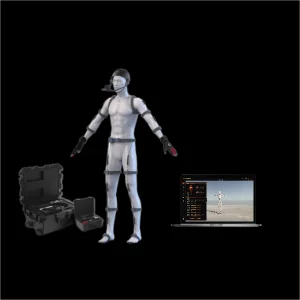
In rotational sports such as golf, tennis, and baseball pitching, energy transfer through the kinetic chain (pelvis → thorax → arm → hand) dictates performance. The VDSuit Full worn under gear quantifies peak pelvis rotation speed and the precise x-factor angle down to sub-degree thresholds at 200 Hz, instantly pinpointing kinetic leaks.
Markerless Bio-Screening in Academies
For youth academies and multi-student coaching environments where suits are impractical for 50+ athletes an hour, optical markerless systems like Virdyn YanDong use multi-view neural estimation to track joint angles during standardized squats, vertical jumps, and change-of-direction drills with zero athlete setup latency.
Bio-Feedback Coaching Stations with Valyze
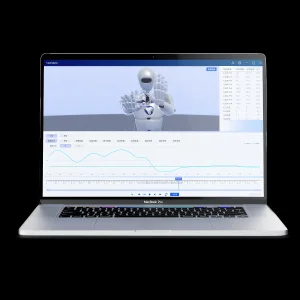
Integrating the Valyze motion data analysis software turns training facilities into visual biofeedback hubs. Athletes review their personal avatars side-by-side with an elite model's gold-standard movement, accelerating motor-skill learning through instant visual discrepancy awareness.
Enterprise Governance: Compliance, Data Privacy & Calibration
Ensuring mission-critical data integrity, international radio compliance, and military-grade biometric data protection across worldwide coaching programs.
Radio Frequency & Hardware Certifications
Virdyn inertial systems and sensor nodes conform fully to FCC (North America), CE (European Union), and TELEC (Japan) regulations. Dynamic 2.4 GHz frequency-hopping spread spectrum (FHSS) technology guarantees rock-solid, packet-loss-free wireless transmission even in gyms saturated with enterprise Wi-Fi and Bluetooth interference.
Biometric Data Privacy (GDPR / HIPAA)
Athletic movement kinematics constitute personally identifiable biometric health metrics. Our capture pipelines run 100% on-premises with air-gapped local database options. This ensures full adherence to European GDPR requirements, US student athlete FERPA statutes, and hospital HIPAA requirements without forced cloud sync.
Standardized Calibration & Anti-Magnetic Fusion
Modern sports facilities are packed with reinforced concrete, steel weight cages, and electromagnetic fields. Virdyn's patented multi-sensor fusion architecture mitigates magnetic distortion dynamically, enabling rapid 5-second T-pose/A-pose calibration routines that remain stable through long high-impact workouts.
Technical Roadmap: The Next Era of Coaching Kinematics
Architectural milestones charting the evolution of embodied intelligence, haptic training closed-loops, and multi-modal sensory networks over the next 24 to 36 months.
Sensor Fusion + Transformer Pose Correction
Merging inertial IMU streams with lightweight edge-AI monocular camera tracking to continuously cancel spatial drift, enabling kilometer-scale outdoor cross-country and sprinting tracking with zero positional error.
Closed-Loop Micro-Current & Haptic Coaching
Transitioning from post-session visual feedback to real-time closed-loop haptic cueing. Wearable suits deliver targeted, sub-millisecond tactile signals to correct postural errors the instant an athlete leaves their optimal biomechanical corridor.
Deep Musculoskeletal & Fatigue Modeling
Deep-layer retargeting pipelines that estimate muscle activation forces, joint reaction forces, and tendon strain non-invasively in real time, alerting coaches to neuromuscular fatigue before clinical tears occur.
Integrated Coaching Solutions: Deployment Suite 02
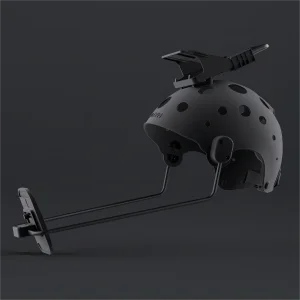
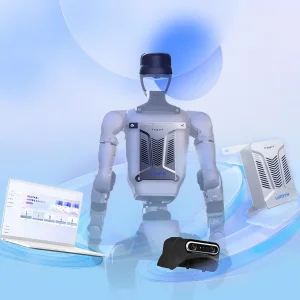
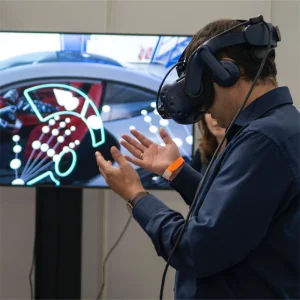
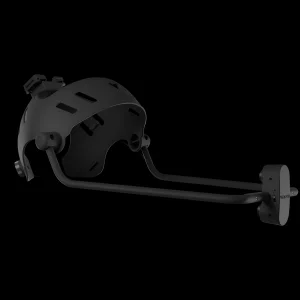
Facial analysis, dexterous gloves, robotics telemetry, and high-impact specialized capture gear that expand your diagnostic setup into complete performance planning.

Frequently Asked Questions: Coaching & Mocap Integration
In-depth answers covering kinematics accuracy, high-impact athletic tracking, system calibration, and multi-sensor synchronization.