
Mobile Motion Capture is changing how studios record movement outside controlled stages. Lightweight suits, inertial sensors, and wireless streaming now support production in offices, classrooms, and outdoor locations. This flexibility matters to global buyers seeking faster setup and lower operating costs.
Industry forecasts show strong momentum. Grand View Research valued the global motion capture market at approximately USD 226 million in 2023. It expects growth near 14% annually through 2030. MarketsandMarkets also predicts expansion, although its market estimate differs. The gap deserves attention. Definitions vary between full-body systems, software, and wearable devices.
China has become an important manufacturing base for this category. Its suppliers commonly combine sensor development, garment production, firmware engineering, and export support. However, product quality is not equal across factories. Buyers should examine sampling accuracy, battery endurance, wireless stability, calibration time, SDK access, and after-sales service. A suit that performs well in a showroom may struggle in a crowded studio.
Performance-capture expert Andy Serkis offers a useful reminder: “The technology is only as good as the performance.” That principle applies directly to Mobile Motion Capture. Hardware must preserve expressive movement, not merely produce attractive specifications.
This guide introduces leading Chinese manufacturers for global buyers. It considers documented capabilities, practical testing, integration support, and commercial reliability. Certifications and shipping records also matter. Some supplier claims remain difficult to verify. That is an uncomfortable limitation, but responsible comparison must acknowledge it.
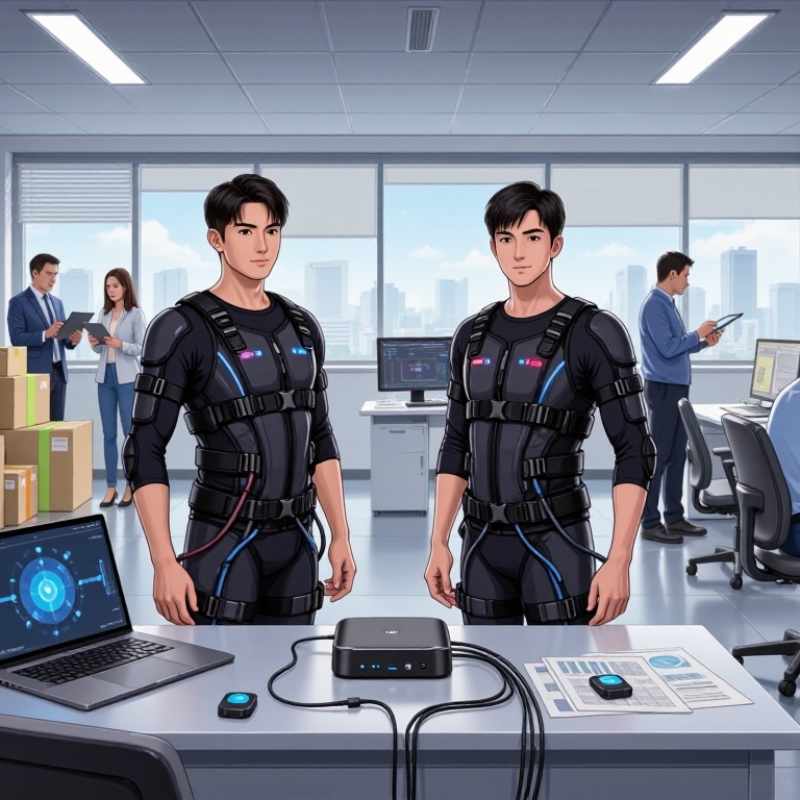
Mobile motion capture is a portable system that tracks body movement without requiring a fixed studio. It commonly uses wearable sensors, a compact recording unit, and software for data processing. Sensors attached to the wrists, ankles, waist, and chest follow motion during walking, jumping, or performance work. Setup is faster. That speed matters when teams work in changing locations.
For global buyers, mobile capture can reduce studio costs and support game development, animation, sports research, training, and virtual production. A performer may move across a warehouse floor while the system records usable movement data. Experienced technicians still check sensor placement, calibration, battery life, and wireless stability before filming. Small errors can create visible foot sliding or unnatural shoulder movement. Testing matters more than impressive product descriptions.
A reliable manufacturer should provide clear technical specifications, practical training, maintenance support, and secure data-handling options. Buyers should request sample files and test the system with different body sizes and movement speeds. Performance may decline near metal equipment or crowded wireless networks. That limitation is easy to overlook. I would also compare replacement costs, software compatibility, export formats, and local service response times. A portable system is valuable, but portability alone does not guarantee accurate results.
Mobile motion capture records human movement outside a fixed studio by using wearable inertial sensors, cameras, depth sensors, or smartphones. The chart shows representative data-acquisition rates commonly used in mobile motion-capture workflows. Video frame rates and inertial-sensor sampling rates are different technical measures and should not be compared as identical performance indicators.
Higher acquisition rates can help capture fast movements, but practical system selection also depends on calibration stability, wireless transmission, latency, battery life, occlusion resistance, software compatibility, and the accuracy required by the application.
China’s motion capture manufacturing base is expanding with global demand. A 2024 MarketsandMarkets report estimated the market at about USD 246 million in 2023. It also projected a 13.8% compound annual growth rate through 2028. These figures make supplier evaluation more important, not easier.
Check technical performance before discussing price. Ask for capture frequency, end-to-end latency, calibration time, and error under occlusion. Request raw test footage, not only edited demonstrations. A reliable supplier should explain sensor placement, lighting limits, and replacement procedures. For animation, verify export support for common formats, skeleton mapping, and software development tools. For robotics, examine time synchronization and repeatability. A two-hour factory test can reveal more than a polished sales presentation.
Quality systems matter. Review documented incoming inspection, batch testing, firmware control, and final inspection records. A 2023 industry report estimated that optical systems remain widely used for high-precision applications, while inertial systems offer greater mobility. This difference affects studio size, outdoor use, and total ownership cost. Ask whether the quoted accuracy comes from ideal laboratory conditions. It often does. I would also audit communication speed, spare-part availability, and technical support in your time zone. A spreadsheet may miss poor calibration training. That is an easy weakness to underestimate.
Leading Chinese mobile motion capture manufacturers increasingly focus on lightweight sensor suits, stable wireless transmission, and practical software integration. Their systems often support animation, virtual production, sports analysis, education, and industrial training. Many manufacturers combine inertial sensors with optical references, helping users capture movement in studios, classrooms, and temporary outdoor locations.
Portability matters. A well-designed suit should fit inside a compact case and operate through several shooting sessions. Chinese manufacturers commonly offer modular sensor layouts, replaceable straps, and customized SDK access. These features help overseas teams connect motion data with existing engines or visualization tools. Factory-based production can also support smaller custom orders, faster component adjustments, and consistent quality checks for sensor alignment, battery safety, and wireless performance.
Real testing still reveals limitations. Inertial systems may experience drift during long recordings or rapid floor movements. Calibration is not optional. Software documentation may also vary in clarity, especially for first-time international users. Buyers should request sample data, latency measurements, battery-cycle information, and support response terms before placing large orders. A short trial in the target environment can expose signal interference, uncomfortable straps, or difficult retargeting workflows. Test before scaling. This practical step often matters more than an impressive specification sheet.
China’s mobile motion capture manufacturers vary widely in technology, pricing, support, and export readiness. Inertial systems use body-worn sensors and work without cameras. They suit studios, training rooms, and outdoor shoots. Optical systems can deliver stronger spatial accuracy, but they need controlled lighting and larger spaces.
Entry-level inertial kits may cost around $1,500 to $5,000. Professional systems often exceed $8,000. Price alone misleads. Ask about sensor count, battery life, sampling rate, latency, and software licenses.
A useful trial should include fast turns, crouching, hand gestures, and a five-minute walking test. Watch for drift. It can ruin clean animation.
Support quality deserves equal attention. Reliable suppliers provide calibration guides, firmware updates, remote troubleshooting, and replacement parts. Request a written response-time policy. Export-ready manufacturers should supply commercial invoices, packing details, battery transport documents, and clear tariff information. Regional certifications may also matter. Check them independently. Some suppliers communicate well before payment, then respond slowly after delivery. That weakness is easy to miss. A small pilot order, with acceptance criteria, gives buyers better evidence than polished demonstrations. The process is not perfect, especially when software compatibility changes between versions.
Selecting a Chinese mobile motion capture manufacturer requires more than comparing catalog prices. Global buyers should examine sensor stability, calibration methods, wireless range, and software compatibility. Ask for raw performance data, not only polished demonstration videos. A useful test measures latency during walking, turning, and rapid arm movement.
Request a sample unit before signing a large production agreement. Check whether the suit fits different body sizes without restricting movement. Inspect connector strength, battery access, charging time, and cleaning procedures. Small details matter. A loose strap can distort movement data during a full-day shoot. Confirm whether the manufacturer provides SDK documentation, firmware updates, technical training, and replacement parts.
Manufacturing evidence deserves equal attention. Review quality-control records, production capacity, inspection steps, and communication response times. Ask how they handle sensor failures and inconsistent calibration. An on-site or independent factory audit can reveal gaps that online meetings hide. Verify export packaging, product labeling, warranty terms, and regional compliance documents before payment. A low quotation may exclude software support or future component changes. That can become expensive.
Experienced buyers should compare at least two sample reports using the same motion tests. They should also clarify ownership of recorded movement data and access permissions. A supplier may appear technically strong but struggle with English documentation or time-zone support. That weakness is easy to overlook. Build a written acceptance checklist, then revise it after the pilot project. The first version is rarely perfect.
| Evaluation Dimension | Recommended Buyer Benchmark | Why It Matters for Mobile Motion Capture | Evidence to Request | Suggested Weight | Pass / Review Rule |
|---|---|---|---|---|---|
| Tracking Accuracy and Drift | Define a tested accuracy target for the intended use case, with separate results for short-duration capture and extended sessions. | Inertial systems can accumulate orientation and position drift, especially during long captures or magnetic interference. | Independent test report, calibration procedure, drift results, magnetic-interference test, and raw sample data. | 20% | Pass only after witnessed or independently verified testing. |
| Sensor and System Sampling | The system should provide a documented sampling rate and latency suitable for the buyer’s application, such as animation, sports analysis, training, or research. | Sampling rate, synchronization, and end-to-end latency affect fast movement reconstruction and real-time feedback. | Technical datasheet, timestamp architecture, latency measurement, synchronization method, and live demonstration. | 10% | Confirm performance using the buyer’s target movement scenarios. |
| Wearable Ergonomics | Document sensor placement, garment sizes, attachment method, total wearable load, charging process, and operating time. | Poor fit, cable interference, battery limitations, or uncomfortable straps can reduce capture quality and user adoption. | Size chart, product weight breakdown, battery test record, wash or cleaning instructions, and repeated fitting trial. | 10% | Require a pilot test with representative users. |
| Software and Data Compatibility | Support documented export formats and integration methods required by the buyer’s workflow, including real-time or offline data transfer where applicable. | A capable hardware system can still create high integration costs if data cannot move reliably into existing production or analysis software. | API documentation, SDK terms, sample files, supported operating systems, version history, and integration demonstration. | 15% | Test the complete data path before signing a production order. |
| Manufacturing Quality Control | Use documented incoming-material inspection, assembly checks, calibration control, final functional testing, and serial-number traceability. | Small variations in sensors, connectors, batteries, and assembly can affect repeatability across multiple suits or batches. | Quality manual, inspection records, control plan, calibration certificates, nonconformance process, and factory audit access. | 15% | Prefer auditable procedures over verbal quality assurances. |
| Prototype-to-Production Capability | The partner should demonstrate a controlled process for engineering samples, design changes, pilot production, and volume manufacturing. | Motion-capture products combine electronics, firmware, mechanical parts, wearable materials, and software; uncontrolled changes can disrupt the whole system. | Production flow chart, engineering-change procedure, pilot-batch report, capacity plan, and component-sourcing policy. | 10% | Approve production only after a documented pilot build. |
| Regulatory and Export Readiness | Provide applicable product declarations, test reports, labeling information, battery documentation, and export paperwork for the destination market. | Wireless modules, lithium batteries, chargers, and electronic equipment may be subject to different requirements by destination. | Declaration documents, laboratory reports, battery transport documents, user manuals, labels, and customs classification support. | 10% | Verify requirements with the importer or local compliance advisor. |
| After-Sales Support and Spare Parts | Set written response times, firmware-support policy, repair options, spare-parts availability, warranty terms, and remote troubleshooting procedures. | A global buyer may need support for calibration, firmware, batteries, straps, connectors, and software updates after delivery. | Service-level agreement, warranty policy, spare-parts list, escalation contacts, repair workflow, and support-ticket examples. | 10% | Include service obligations in the purchase contract. |
| Total Evaluation Weight | 100% | Use evidence-based scoring | |||
It is a portable system that records body movement without a fixed studio. Wearable sensors track the wrists, ankles, waist, and chest. Setup is faster. Results still require careful calibration.
Teams use it for animation, game development, sports research, training, education, and virtual production. A performer can move across a warehouse floor. Temporary locations are possible.
Test walking, fast turns, crouching, hand gestures, and five minutes of continuous movement. Request sample files and latency measurements. Watch for foot sliding and body drift.
Entry-level inertial kits may cost about $1,500 to $5,000. Professional systems often exceed $8,000. Pricing alone proves very little.
Inertial systems use body-worn sensors and usually work without cameras. Optical systems may offer stronger spatial accuracy. They need controlled lighting and larger spaces.
Compare sensor count, battery life, sampling rate, wireless stability, latency, and software licenses. Also check export formats and software compatibility. Small details matter.
Look for calibration guides, firmware updates, replacement parts, and remote troubleshooting. Request written response-time terms. Support may weaken after delivery.
Metal equipment and crowded wireless networks may cause interference. Inertial systems can drift during long recordings or rapid floor movements. Portability does not guarantee accuracy.
Start with a small pilot order and define acceptance criteria. Check battery transport documents, invoices, packing details, and tariff information. Independent certification checks remain wise.
Reliable performance comes from accurate sensors, stable software, practical training, and repeated field testing. A polished demonstration is not enough. Test before scaling.
Mobile Motion Capture is transforming how movement data is recorded for applications such as animation, sports analysis, virtual production, rehabilitation, and interactive experiences. This article explains the value of portable capture systems, including their flexibility, efficient setup, real-time tracking capabilities, and suitability for indoor or outdoor workflows. It also outlines the main factors global buyers should consider when evaluating Chinese manufacturers, such as sensor accuracy, motion range, system stability, software compatibility, customization options, production quality, and data security.
The article compares manufacturing capabilities across technology performance, pricing, technical support, delivery reliability, communication, and export readiness. It also highlights the importance of testing product samples, reviewing quality-control procedures, confirming certifications, understanding warranty terms, and assessing after-sales service before placing an order. By balancing technical requirements, budget, scalability, and long-term cooperation potential, international buyers can select a dependable manufacturing partner that delivers practical, high-quality Mobile Motion Capture solutions for their specific projects.
