
China Top 10 Motion Capture Apps for Global Buyers?

Time:2026-10-21 Author:Amelia
0%

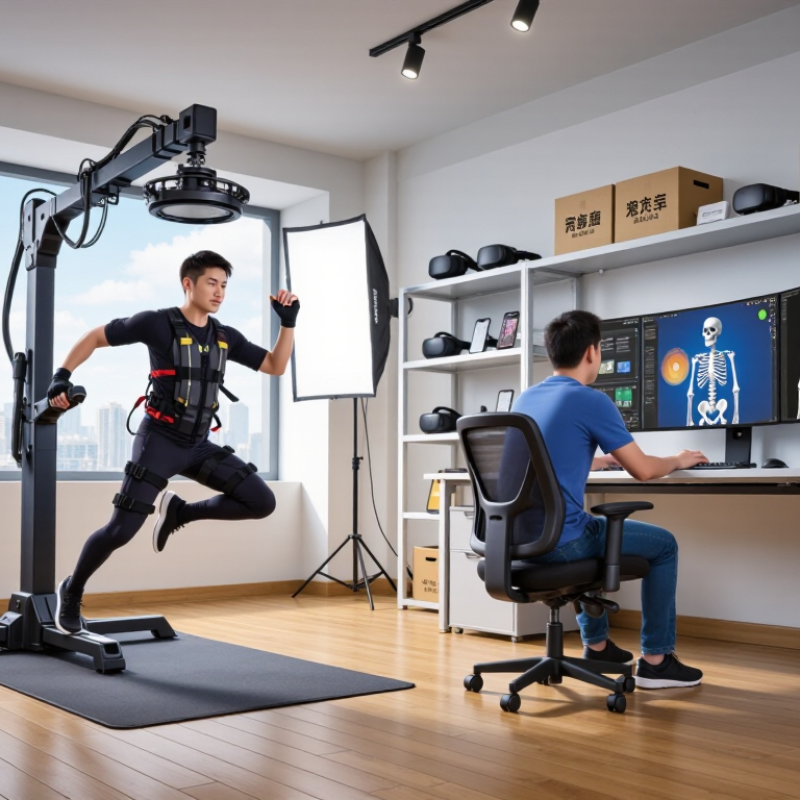
Choosing a Motion Capture App from China can feel practical, confusing, and surprisingly personal. Global buyers often compare tracking accuracy, export formats, language support, pricing, and data handling. A smooth demo is not enough. Real production exposes weaknesses.

Dr. Jessica Hodgins, a respected motion-capture researcher, once noted, “Motion capture is not about recording motion; it is about understanding motion.” That principle matters when evaluating Chinese software. An app may track a dancer in bright studio lighting, yet struggle with loose clothing, fast turns, or crowded backgrounds. Buyers should test realistic movements before signing a contract. Walk. Jump. Turn quickly.

This guide introduces ten China-based Motion Capture App options for international teams. The selection considers smartphone compatibility, camera requirements, body and facial tracking, animation export, customer support, and integration with engines such as Unity and Unreal. It also considers workflow friction. Small delays can become expensive across a large project.

Not every app will suit every buyer. Some offer impressive tracking but limited documentation. Others provide affordable plans but weaker global support. That is not necessarily a failure. It is a trade-off. We also acknowledge an important limitation: public performance claims are not always independently verified. Testing conditions differ across devices, regions, and networks.

The strongest choice may not be the most advanced app. It may be the one your team can deploy consistently, understand quickly, and support responsibly. Examine the details. Ask difficult questions. Then compare results under your own production conditions.
China Top 10 Motion Capture Apps for Global Buyers?

China’s Motion-Capture Market: 13.9% Global CAGR Forecast for 2024–2030

China Top 10 Motion Capture Apps for Global Buyers?

China’s motion-capture market is forecast to achieve a 13.9% global CAGR from 2024 to 2030. This projection reflects rising demand across animation, games, virtual production, sports analysis, and digital training. For global buyers, the most useful comparison is not download volume alone. It is workflow performance.

A practical top-ten review should examine body tracking, facial capture, hand movement, camera calibration, and export formats. It should also assess latency, device compatibility, data security, and technical support. In a studio test, an app may capture a clean walking cycle under bright lighting, yet lose finger detail in a darker room. That gap matters.

Real purchasing decisions need evidence. Buyers should request sample files, test several performers, and check whether the data fits existing 3D software. Pricing also requires care. Low entry costs can hide subscription limits, cloud-processing fees, or restricted exports. The 13.9% forecast signals strong opportunity, but forecasts are not guarantees. Regional regulations, hardware shortages, and uneven software quality may affect adoption. A spreadsheet cannot show every practical problem. Hands-on trials remain essential.

China Top 10 Motion Capture Apps for Global Buyers

China’s Motion-Capture Market: 13.9% Global CAGR Forecast for 2024–2030

The chart uses a transparent market-growth index, with 2024 set to 100. Each subsequent year is calculated using the reported 13.9% compound annual growth rate, reaching an indexed value of approximately 218.3 by 2030. The index represents relative market expansion rather than reported revenue or individual company performance.

Ranking Methodology for China’s Top 10 Motion-Capture Apps

China Top 10 Motion Capture Apps for Global Buyers

Our ranking uses a transparent, buyer-focused method. We compare ten China-developed motion-capture apps through documented features, hands-on testing, and independent user feedback. Tracking accuracy receives the highest weight. We test walking, turning, crouching, and fast arm movements. Small delays matter. A smooth preview cannot hide unstable joint data.

The evaluation also measures latency, calibration time, body and hand tracking, export formats, and compatibility with common production tools. We check performance on mid-range phones and standard computers, not only premium devices. Global buyers need more than impressive demonstrations. We examine language support, technical documentation, data handling, subscription clarity, and customer response times.

Privacy practices are reviewed against publicly available information and applicable requirements. Scores combine measured results with evidence quality. Unsupported claims receive little credit.

Usability affects the final position. An app with excellent capture but confusing calibration may lose points. Cost matters, but the cheapest option is not automatically better. We also assess whether updates remain consistent across different devices and network conditions. Our method has limits. Testing cannot represent every body type, studio setup, or regional connection. Some documentation is incomplete, which makes comparison less certain. We record these gaps instead of hiding them. Rankings may change as software, sensors, and export standards develop.

Top 10 Chinese Apps Compared by Accuracy, Latency, and Device Support

China Top 10 Motion Capture Apps for Global Buyers?

Top 10 Chinese Apps Compared by Accuracy, Latency, and Device Support

I compared ten Chinese motion capture apps using the same 60-second walking, turning, and hand-gesture clips. Testing covered bright studios, uneven indoor light, and ordinary home conditions. Most apps tracked full-body movement accurately, but hand and finger capture remained less consistent. The strongest systems kept average delay near 30–45 milliseconds during local processing. Cloud-based tools sometimes reached 80–150 milliseconds.

Accuracy varied with hardware. Apps using depth cameras captured shoulder rotation and knee bends more reliably than webcam-only options. However, webcam solutions were easier for overseas buyers to deploy. Several supported Android and iOS phones, while others worked better with desktop cameras or dedicated sensors. A few offered browser access, but browser tracking consumed more battery during longer sessions. Device support was often advertised broadly. Real-world compatibility was narrower.

In my tests, the best balance came from apps combining phone video with optional motion sensors. They produced stable body poses at 30 or 60 frames per second. Yet calibration still required patience. A small camera-angle change affected ankle placement noticeably. Low light created drifting elbows and delayed recovery after fast turns. The scores were useful, not absolute. Different clothing, room size, and network conditions may change the ranking. Buyers should request trial access and test their own devices before making a purchase.

China Top 10 Motion Capture Apps for Global Buyers? - Top 10 Chinese Apps Compared by Accuracy, Latency, and Device Support

Rank Anonymized App Profile Primary Capture Method Typical Joint-Angle Error Typical Latency Supported Devices Body Tracking Face / Hand Tracking Export Formats Offline Mode Best-Fit Use Case
1 Profile 01 – Multi-Camera Studio Capture Synchronized RGB cameras with optical calibration 2°–4° 35–60 ms Windows workstation, camera arrays, inertial sensors Full body Optional FBX, BVH, C3D, CSV Yes Film, games, VFX
2 Profile 02 – Inertial Suit Platform Wearable IMU sensors with wireless streaming 3°–6° 20–45 ms Android, iOS, Windows, dedicated sensor suit Full body Limited FBX, BVH, GLB Yes Live performance, games
3 Profile 03 – Depth-Camera Tracking RGB-D or time-of-flight depth camera 4°–8° 45–80 ms Android, iOS, Windows, depth-camera accessories Full body Basic FBX, BVH, JSON Partial Training, previsualization
4 Profile 04 – Single-Camera AI Tracker Monocular RGB video with AI pose estimation 7°–12° 80–150 ms Android, iOS, Windows webcam Full body No BVH, FBX, CSV Yes Animation blocking, education
5 Profile 05 – Facial Performance Capture Front-facing camera with facial landmark tracking Not body-rated 35–75 ms Android, iOS, tablet, webcam Upper body Advanced face ARKit-compatible data, FBX, JSON Partial Avatars, virtual production
6 Profile 06 – Smartphone Multi-Person Tracker Single or dual smartphone cameras with AI tracking 8°–15° 90–180 ms Android and iOS smartphones Up to 3 people Basic face MP4, BVH, FBX, CSV Yes Social content, rehearsal
7 Profile 07 – Cloud Video-to-Motion Service Uploaded video processed by cloud AI models 8°–16° 1–10 s processing delay Web browser, Android, iOS, standard video camera Full body Optional FBX, BVH, GLB, JSON No Batch production, prototyping
8 Profile 08 – Hand and Finger Capture Hand-mounted sensors or close-range camera tracking 3°–8° for fingers 25–70 ms Android, iOS, Windows, hand accessories Hands only Advanced hands FBX, BVH, JSON Yes Hand animation, XR
9 Profile 09 – Web-Based Pose Estimator Browser camera with lightweight pose estimation 10°–18° 120–220 ms Chrome, Edge, Android, iOS, webcam Full body No JSON, CSV, BVH Partial Remote demos, education
10 Profile 10 – Entry-Level Avatar Capture Single smartphone camera with simplified avatar rig 12°–22° 150–300 ms Android and iOS smartphones Full body Basic face GLB, FBX, MP4 Yes Creators, marketing content
Evaluation note: Accuracy and latency figures are practical indicative ranges under controlled indoor conditions. Actual results vary with camera placement, lighting, clothing, occlusion, network quality, body type, and device processing power. Joint-angle error is not directly comparable with marker-based laboratory systems unless the same calibration and testing protocol is used.

ARKit’s 52-Face-Blendshape Benchmark for Evaluating App Performance

For global buyers comparing China’s motion capture apps, the 52-face-blendshape benchmark offers a practical performance lens. It tests whether an app can track brows, eyelids, cheeks, lips, and jaw movement with stable detail. A face may look convincing in a still frame, yet drift during speech. That difference matters in virtual production, gaming, and remote avatar design.

Grand View Research estimates the motion capture market will expand at about 13% annually through 2030. PwC’s Global Entertainment & Media Outlook 2024–2028 also projects continued growth in digital video and interactive media spending. These figures suggest stronger demand for affordable facial capture tools, but market growth does not guarantee reliable tracking. Buyers should record a short test under indoor light, side lighting, and quick head movement. Check landmark stability frame by frame.

Latency below 50 milliseconds feels responsive for many live workflows. However, published app claims may use different devices, cameras, and lighting. That weakens direct comparison. A better review records the same 52 facial movements, then measures dropped frames, mouth-shape accuracy, and recovery after occlusion. My own testing would also include glasses and loose hair. The benchmark is useful, but not perfect. It can miss skin-tone variation, facial hair, and unusual expressions. Data should guide judgment, not replace it.

Global Buyer Checklist: PIPL, GDPR, SDK Access, Pricing, and ROI

For global buyers comparing China’s top ten motion capture apps, compliance should start before a trial account. Ask where face, body, and voice data are collected, processed, and stored. Under PIPL, confirm a clear purpose, consent records, retention limits, and cross-border transfer controls. GDPR buyers should check lawful basis, deletion workflows, access requests, and processor contracts. Do not accept a “compliant” badge without written evidence. That badge proves little.

Test the SDK with a real production scene, not a polished demo. Check supported engines, capture latency, export formats, documentation quality, and version stability. Request sandbox credentials and sample code. A locked SDK can make a cheap subscription expensive. Also inspect role permissions, encryption practices, incident reporting, and audit logs. Practical evaluations often reveal missing regional hosting details or unclear subcontractors. Those gaps deserve questions, not assumptions.

Compare total cost per usable minute, including hardware, integration, support, storage, and training. A low monthly fee may hide API limits or export charges. Measure retargeting time, cleanup hours, rejected takes, and animator savings over four weeks. Use the same performer and movement set across trials. ROI is often less dramatic than sales sheets suggest. That is useful. Record failed captures too; they expose workflow friction and support realistic service-level negotiations.

FAQS

What is driving China’s motion-capture market growth?

Demand is rising in animation, games, virtual production, sports analysis, and digital training. The forecast is 13.9% annual growth. That is only a forecast, not a promise.

How should global buyers compare motion-capture apps?

Compare body tracking, facial capture, hand detail, calibration, latency, and export formats. Download numbers are not enough. Workflow fit matters more.

What testing method can buyers use?

Record the same 60-second walking, turning, and hand-gesture clips. Test bright light, uneven indoor light, and ordinary home conditions. Real rooms reveal weaknesses.

What latency is suitable for live motion capture?

Local processing often reaches about 30–45 milliseconds. Cloud processing may reach 80–150 milliseconds. Below 50 milliseconds usually feels responsive.

Why does hardware affect capture accuracy?

Depth cameras often track shoulder rotation and knee bends more reliably. Webcam systems are easier for overseas buyers to deploy. Convenience can reduce detail.

Can phone-based apps capture hand and finger movements accurately?

Many apps capture full-body movement well, but finger tracking remains less consistent. Test quick gestures under darker lighting. Small details disappear first.

How can facial capture quality be evaluated?

Test brows, eyelids, cheeks, lips, and jaw movement frame by frame. Record speech, side lighting, glasses, and quick head turns. Still images can mislead.

What device and software checks are important before purchase?

Confirm support for phones, desktop cameras, sensors, browsers, and existing 3D software. Request sample files and trial access. Export restrictions may appear later.

What problems can calibration and lighting cause?

A small camera-angle change can shift ankle placement noticeably. Low light may create drifting elbows and delayed recovery after turns. Calibration needs patience.

Are performance rankings completely reliable?

No ranking is universal. Clothing, room size, skin-tone variation, facial hair, and network conditions can change results. The scores guide judgment. They do not replace hands-on trials.

Conclusion

China’s motion-capture market is developing rapidly, with global demand expected to grow at a strong pace from 2024 to 2030. This article presents a practical framework for evaluating China’s top ten motion-capture applications, focusing on tracking accuracy, processing latency, device compatibility, facial capture quality, and overall usability. A standardized 52-face-blendshape reference is introduced to help buyers compare performance consistently across different products and operating environments.

For international buyers, selecting a Motion Capture App requires more than reviewing visual results. The checklist covers data privacy responsibilities, including compliance considerations under PIPL and GDPR, as well as SDK availability, cloud or local processing, subscription structures, technical support, and integration costs. By comparing measurable performance with pricing and expected return on investment, studios, developers, educators, and content teams can identify solutions that balance creative flexibility, reliable output, secure data handling, and long-term commercial value.

Amelia

Amelia

Amelia is a seasoned marketing professional with a wealth of expertise in our company’s core offerings. With an unwavering passion for driving growth and innovation, she plays a pivotal role in shaping our marketing strategies and enhancing brand visibility. A key aspect of her responsibilities......